

There’s a moment many bloggers have experienced recently: you check your analytics, see your content ranking on page one, and wonder why traffic has fallen off a cliff.
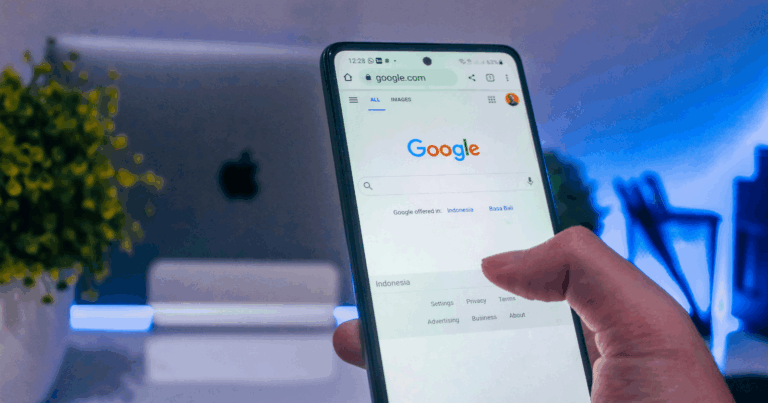
The numbers don’t make sense until you search for your own keywords and find them: Google’s AI Overviews, sitting above your carefully crafted article, synthesizing your expertise into a neat paragraph that answers the question without requiring anyone to click.
This isn’t a temporary glitch in the system. According to Seer Interactive’s September 2025 analysis of 25.1 million organic impressions, click-through rates plummeted 61% when AI Overviews appear (from 1.76% to just 0.61%).
For paid search, the decline is even steeper at 68%. Even queries without AI Overviews have lost 41% of their click-through rate year-over-year.
The numbers tell a brutal story: approximately 60% of Google searches now end without any click to a website, up from 58% in 2024.
AI Overviews have grown from appearing in 6.49% of searches in January 2025 to over 50% of all queries by October 2025.
Major publishers have hemorrhaged traffic (CNN down 27-38%, HubSpot’s organic visits cratering from 13.5 million to as low as 6 million monthly), and educational platform Chegg reporting a 49% decline in non-subscriber traffic.
For bloggers who built their businesses on the assumption that ranking equals traffic, this represents a fundamental break in the system. You did everything right: wrote comprehensive content, earned backlinks, optimized for user experience.
And Google’s AI consumed your work, extracted its value, and served it to users who never needed to acknowledge you existed.
The deeper problem: when ranking no longer guarantees visibility
What makes this shift particularly disorienting is that it breaks the core promise that has defined SEO for two decades. We were taught a simple equation: improve your content, earn higher rankings, receive more traffic. That formula no longer holds.
The 92.36% of AI Overview citations come from domains ranking in the top 10, but ranking in the top 10 no longer guarantees you’ll be seen.
Traditional blue links now compete with AI-generated summaries that command attention at the top of the search results, often spanning 169 words and including about seven citations when expanded.
The first organic result frequently appears 1,674 pixels down the page (below the fold on most devices).
This creates a perverse dynamic. Bloggers invest time and resources creating authoritative content that Google’s AI needs to function. The AI learns from that content, synthesizes it, and presents it as Google’s own answer.
The blogger receives no compensation, no traffic, no recognition: just the satisfaction of knowing they contributed to a system that increasingly excludes them.
Some publishers have given up entirely. The travel blog The Planet D shut down after its traffic dropped 90% following AI Overviews’ introduction. For bloggers dependent on advertising revenue, a 60% traffic decline translates to a 60% income decline.
There’s no pivot, no adaptation: just the slow realization that the platform they built their livelihood on has fundamentally changed the terms of engagement without their consent.
The attribution game: why some sites still win
Here’s what most coverage of AI Overviews misses: this isn’t just about traffic loss. It’s about the redistribution of authority in an AI-mediated information economy.
When you appear as a cited source in an AI Overview, something remarkable happens. According to the same Seer Interactive research, brands cited in AI Overviews earn 35% more organic clicks and 91% more paid clicks compared to non-cited competitors on the same query.
A single citation can generate more qualified traffic than ranking third in traditional results.
This creates a new hierarchy. Analysis of 36 million AI Overviews and 46 million citations between March and August 2025 reveals that Wikipedia, YouTube, Google’s own properties, Reddit, and Amazon collectively account for 38% of all citations.
Yet even these giants aren’t immune (Wikipedia experienced an 8% decline in human pageviews despite being the single most referenced source).
The pattern that emerges challenges conventional SEO wisdom. Smaller brands with strong topical authority are earning disproportionate representation.
Navy Federal Credit Union achieved significant visibility in banking queries despite competing against Bank of America’s 32.2% visibility. Reddit saw 450% citation growth, demonstrating that platforms providing authentic user experiences can thrive in AI-dominated search.
What these winners understand is that the game has changed from optimizing for clicks to optimizing for citations.
When someone reads an AI Overview that synthesizes your content without clicking through, you’ve still influenced their decision. You just can’t track it in Google Analytics.
The question becomes: what makes content citation-worthy in AI’s eyes?
The content that AI can’t summarize
Not all content is equally vulnerable to AI extraction. Simple informational queries (“what is X,” “how to do Y”) are precisely what AI Overviews excel at answering.
If your blog exists primarily to provide straightforward definitions or step-by-step instructions that fit neatly into a 169-word summary, you’re directly competing with a system designed to eliminate the need for your existence.
The content that survives (and increasingly thrives) resists easy summarization.
Personal narratives that weave expertise with lived experience. Case studies that reveal the messy reality behind polished advice. Original research that presents data AI models can’t generate themselves. Controversial opinions that spark discussion rather than settle it. Deeply reported investigations that require readers to follow a thread of evidence.
Video content now dominates citations across verticals, accounting for approximately 23.3% of all AI citations according to Surfer SEO’s analysis.
AI models can interpret video content, but the consumption experience requires users to visit the platform. You can’t meaningfully experience a cooking video, a product review, or a tutorial in a text summary.
This points toward a broader truth: the content that maintains value in an AI-mediated world is content that creates experiences, not just conveys information.
Forums like Reddit thrive because they provide social proof and community perspective. Recipe blogs survive not because of their ingredient lists (which AI can easily summarize) but because of the stories, variations, and comment sections where home cooks troubleshoot problems.
The shift requires bloggers to reconsider their fundamental value proposition.
If your primary offering is information that AI can extract and repackage, you’re building on increasingly unstable ground. If your value lies in perspective, personality, community, or experiences that transcend information transfer, you’re positioned to remain relevant.
Building for an AI-first search ecosystem
The conventional response to AI Overviews focuses on technical optimization: structured data, schema markup, topical authority signals.
These matter, but they’re table stakes. The deeper strategic question is about what you’re optimizing for.
Traditional SEO optimized for rankings and traffic. The emerging paradigm (what some are calling Generative Engine Optimization (GEO)) optimizes for citation, attribution, and influence even when clicks don’t materialize.
This requires rethinking success metrics entirely.
First, accept that not all traffic loss is recoverable through better optimization. Users are seeking answers on ChatGPT (800 million weekly active users), Perplexity (780 million queries in May 2025), and social platforms before ever reaching Google.
The total addressable market of people who begin their information journey on traditional search is shrinking. No amount of SEO excellence can recapture traffic that never enters the search ecosystem.
Second, prioritize direct relationships over borrowed traffic. Email lists, RSS subscribers, social media followers who actively choose your content: these represent owned distribution channels that AI intermediaries can’t intercept. When readers come directly to you, no algorithm decides whether you’re citation-worthy.
Third, diversify across AI platforms. ChatGPT favors Wikipedia (7.8% of citations), Google AI Overviews prefers Reddit (2.2%), and Perplexity heavily weights Reddit (6.6%).
Each platform demonstrates distinct sourcing patterns. A multi-platform strategy means creating content that satisfies different AI systems’ preferences while maintaining your core editorial voice.
Fourth, build for brand recognition. When AI systems can’t find a perfect answer, they default to known entities. Strong brand presence (consistent author profiles, entity alignment across platforms, clear topical authority) makes you easier for AI to identify and cite.
Industry analysts predict AI search visitors will surpass traditional search visitors by early 2028. The transition timeline is compressed.
What this means for the future of blogging
Let’s address the uncomfortable question directly: can independent blogging survive in an AI-first search environment?
The answer depends on what kind of blogging we’re talking about. Blogs that exist primarily as SEO content farms (churning out informational articles optimized for search traffic) face existential pressure.
Their entire business model depends on capturing users at the moment of query and monetizing that attention through display advertising. When AI Overviews answer the query directly, the entire value chain collapses.
Blogs that create genuine value beyond information transfer (communities, perspectives, original reporting, experiences) have clearer paths forward.
They’re not immune to traffic declines, but their value doesn’t evaporate when AI can summarize their content. Readers come for reasons that transcend information efficiency.
This creates a natural selection pressure that may ultimately benefit the ecosystem.
The blogs that survive will be those that offer something AI fundamentally can’t replicate: human connection, accountability, curation shaped by values rather than training data, the full context that gets lost in summarization.
But survival requires adaptation. As one SEO consultant noted, the goal is “to show the system who you are and why your content matters”, to both readers and machines.
This means clean technical infrastructure that AI can easily parse, updated content with clear recency signals, strong brand alignment, and structured data that helps AI understand your topical authority.
It also means accepting that the metrics we’ve used to measure success (page views, session duration, bounce rates) increasingly capture an incomplete picture.
When your content influences AI responses that thousands of people read without clicking through to your site, traditional analytics miss your actual impact.
The choice that defines the next chapter
Google’s AI Overviews represent more than a technical change to search results: they represent a philosophical shift in how information flows through digital ecosystems.
The question for bloggers isn’t whether to adapt, but what kind of adaptation preserves the values that made independent publishing meaningful in the first place.
You can optimize aggressively for AI citation, treating Google’s and other AI systems as your new primary audience.
This path requires technical sophistication, continuous monitoring of citation patterns, and acceptance that your work primarily serves to train and inform AI models that may or may not acknowledge your contribution.
Or you can use this disruption as an opportunity to double down on what makes human-created content irreplaceable.
Build direct relationships with readers who value your perspective enough to seek you out regardless of how algorithms distribute attention.
Create content that resists summarization not through obfuscation but through richness: layered analysis, personal narrative, community engagement that exists beyond what any AI can synthesize.
The blogs that thrive won’t be those that simply implement better schema markup or chase citation opportunities.
They’ll be the ones that remember why blogging mattered before it became a traffic arbitrage game – because individual voices, properly cultivated and genuinely engaged, create value that no aggregator can fully capture.
The era of easy traffic from search may be ending.
What comes next depends on whether we’re willing to build for something more enduring than Google’s changing algorithms: meaningful work that earns attention through genuine value rather than optimization tricks.
The choice isn’t between visibility and irrelevance. It’s between optimizing for machines and creating for humans who will seek out quality regardless of what AI suggests.