
There’s a thing I’ve never said out loud about being pregnant for the second time. It’s not dramatic. No dark revelation, no crisis of conscience. Just a small private register of what this particular phase of life has actually felt like versus what I was supposed to feel. I’ve written close to nothing about it. It doesn’t need to go anywhere. But the impulse to put it somewhere, to hand it to someone, anyone, is real. It turns out that impulse is not unusual. It might be one of the most consistently human things there is.
In January 2005, a man named Frank Warren launched a project with almost no infrastructure: a Blogger address and a post office box in Germantown, Maryland. He asked strangers to write a secret they had never told anyone on a homemade postcard and mail it to him. He would publish the best ones every Sunday on a blog. He expected a modest response. Over the following two decades, more than a million postcards arrived. The PostSecret blog became the world’s largest advertisement-free blog, accumulating over 820 million visits. Six books followed, all New York Times bestsellers. The project raised over a million dollars for suicide prevention. Warren was named by Forbes as one of the five most influential people on the internet. What he had stumbled onto was not an internet novelty. It was closer to evidence of something.
The standard reading of PostSecret is that it’s compelling because secrets are compelling, and some of them are — ranging from the petty and funny to the devastating and raw. But that reading misses the more durable finding. The project isn’t evidence that people have secrets. That’s not a discovery. What PostSecret demonstrates is that people cannot hold secrets indefinitely without putting them somewhere. Even anonymously. Even to a stranger who will never know who sent the card. Even with zero chance of response or acknowledgment. The act of writing a secret on a handmade postcard and dropping it in a mailbox was meeting a need that silence apparently couldn’t.
Frank Warren described secrets using a definition that changes how you look at the people around you: “One way to think of a secret is as dark matter — this stuff that makes up 90%-95% of what’s in the universe but that we can’t see, we can’t sense. The only way we know it’s there is how it affects the behavior of other objects.” The secret isn’t the thing being hidden. It’s the force that shapes what gets said around it, which questions produce a slight hesitation, which topics get approached indirectly and never directly.
Warren also described the project as “almost like an anti-Facebook. It’s the true story that you would normally never share in a public arena.” That’s not just a clever line. It describes a specific gap in how we communicate: the growing distance between what we broadcast and what we actually carry. Social media optimizes for the presentable self. PostSecret exists specifically for what doesn’t survive that optimization. The fact that more than a million people sent physical postcards to participate in it suggests the gap is wide.
The range of what arrived in Warren’s mailbox was genuinely wide. Sexual confessions. Criminal admissions. Petty revenges the sender clearly found satisfying. Grief that had never been spoken. Desires so ordinary they’re almost more moving for being kept secret at all. Before PostSecret, Warren volunteered on a late-night suicide prevention hotline, and that background shows in how he talks about what the project does for the people who participate: “When you feel like you’re alone in the world with a secret you haven’t told a soul and then, in a PostSecret book or on the website, you discover a stranger who has articulated your secret even more accurately than you could, that experience doesn’t make your secret go away, but it lets your burden of keeping it lift.” The project has been credited with preventing suicides. That’s not a metaphor.

Family therapists who’ve written about PostSecret have noted the limits. Anonymous disclosure to a stranger is not the same thing as telling the person the secret concerns, and the relief that comes from it doesn’t always last. Posting a secret on the internet is a first step, not a resolution. PostSecret isn’t therapy and Warren doesn’t claim it is. What it does is something more modest: it creates a space where acknowledgment is possible without exposure. For some secrets, that turns out to be enough. For others, it seems to function as a first step toward something harder and more direct.
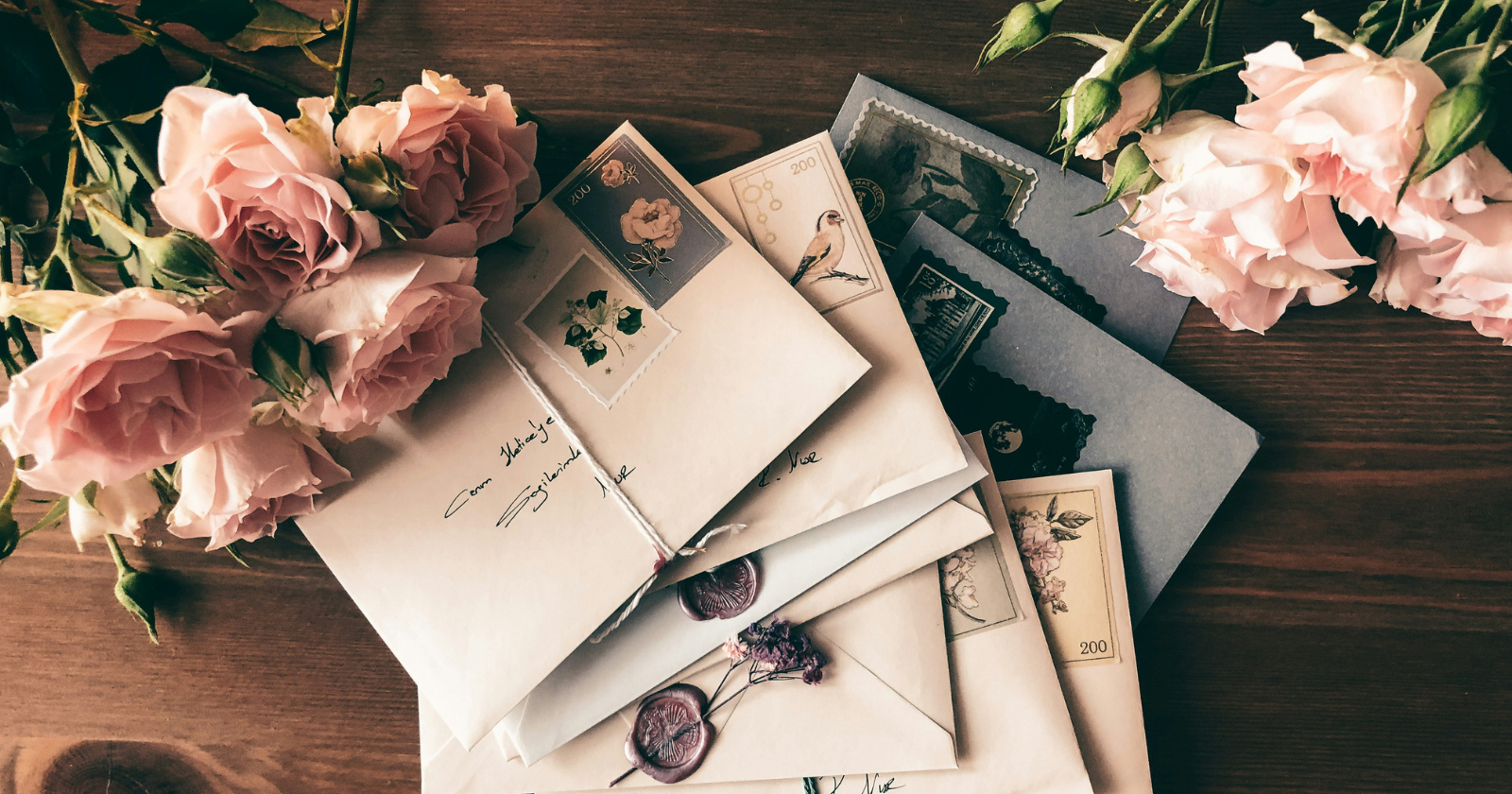
Warren has insisted since the beginning that secrets must arrive on postcards. Not emails, not texts. Postcards. The additional friction is part of the design: you have to find a card, write on it by hand, affix a stamp, and physically walk it to a mailbox. Many of the cards that arrived were elaborately handcrafted, with magazine clippings, painted photographs, careful hand-lettering. People invested real time in the object carrying their secret. Those postcards have been exhibited at the Smithsonian’s National Postal Museum, at MOMA, in Rio. The ritual of making them is apparently part of what disclosure requires.
I live far from most of the people who know me well. My parents are in Central Asia. My in-laws are in Chile. The friends who knew me before I became a mother, before I moved to São Paulo, are scattered across time zones I have to calculate before I call. What I hold is mostly small things, the kind that don’t quite clear the bar for a long-distance phone call. PostSecret exists because that bar is a real obstacle for a lot of people, and because what sits below it still needs to go somewhere. Twenty years in, more than a million postcards, and the mailbox is still open. I don’t think that’s a coincidence.