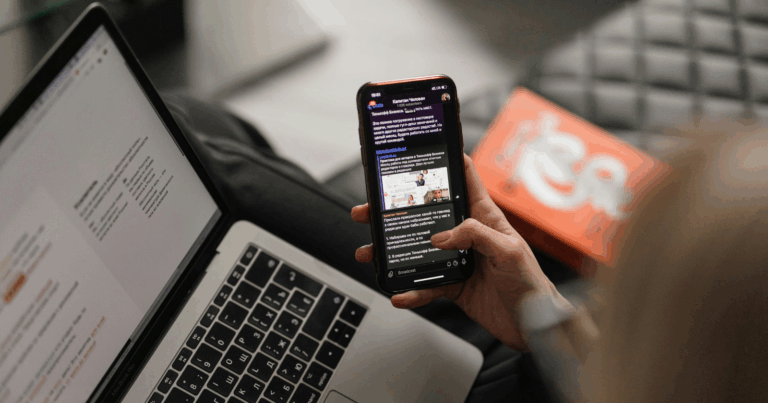
Social media has long been compared to the spokes of a wagon wheel, with each platform connecting to and serving your brand at the hub, limited only by your online influence. It’s a tidy metaphor. The wheel turns, the spokes radiate outward, everything stays in its proper place.
But that metaphor assumes your blog sits at the center, static and separate, while social platforms orbit around it. The reality happening now is messier and more interesting.
Think of your blog as a riverbed. Carved deep over time, defined by banks, following a course you control. Your archives flow in one direction. Your content has depth, permanence, a structure you’ve built article by article. Readers come to this specific place because they know what they’ll find there.
Social media is the ocean. Vast, unpredictable, governed by currents you don’t control. Your content drifts on algorithmic tides. It surfaces, spreads, disappears. The attention is massive but temporary. You’re visible one moment, submerged the next.
For years, we’ve treated these as separate ecosystems. The blog was where serious work happened. Social media was where you marketed that work. You’d publish on your riverbed, then toss pieces into the ocean hoping someone would notice and swim upstream.
That separation is dissolving. The wagon wheel is breaking apart. The riverbed and ocean are blending into something else entirely.
The delta forms
According to Brandwatch, platforms now feature live social media feeds embedded directly into blog content, creating what they call dynamic touchpoints that encourage interaction, comments, and sharing. The boundaries between where blog content ends and social content begins have become genuinely unclear.
Substack Notes, launched as a social feature atop a newsletter publishing platform, exemplifies this convergence. You’re not just writing long-form content anymore. You’re participating in short-form social conversations within the same ecosystem, with over five million paid subscriptions proving the model works.
Tools like Smash Balloon and Curator now aggregate Instagram, Facebook, Twitter, and TikTok content directly into WordPress sites, creating unified feeds where your social posts and blog content coexist in the same visual space. Your ocean content flows into your riverbed and back out again, creating a delta where fresh and salt water mix.
The metaphor extends further. Social commerce sales are projected to exceed 100 billion dollars in the U.S. in 2026, with half of all U.S. social shoppers expected to make purchases on TikTok this year. Blogs that once sold through separate e-commerce platforms now integrate Instagram Shops, TikTok storefronts, and Facebook Marketplace functionality directly into their content streams. The riverbed isn’t just a place to read anymore. It’s a place to buy, subscribe, comment, share, and exist in a continuous state of interaction that mirrors social platforms.
This isn’t simply embedding a Twitter feed in your sidebar. It’s a fundamental reimagining of what a blog is and what it does.
Why the blend matters now
The separation between blogs and social media was always somewhat artificial, a product of technical limitations more than strategic wisdom. Blogs existed on the open web with RSS feeds and comment sections. Social platforms were walled gardens with algorithmic feeds and engagement metrics. Different infrastructures, different purposes.
But reader behavior has fundamentally shifted. Research from the Content Marketing Institute shows that businesses using social media for blog promotion see 32% more traffic than those using traditional methods. More significantly, 54% of decision makers spend over an hour weekly reading thought leadership content, but they discover that content through social channels, not through direct blog visits.
The attention doesn’t live in one place anymore. Your readers exist in a continuous scroll across platforms. They see your Instagram story about a new post, click through to read 800 words on your blog, share a quote to their LinkedIn, discuss it in a Substack Notes thread, then purchase a related product through your embedded shop. The journey zigzags between riverbed and ocean without clear boundaries.
Traditional blog strategy assumed readers would bookmark your URL and return regularly. That mental model is obsolete. Hootsuite research indicates that 52% of customers expect brands to reply to customer service inquiries on social media within one hour. Your blog isn’t a destination anymore. It’s one node in a network of touchpoints where your audience expects real-time responsiveness and seamless movement between formats.
The blend matters because your audience has already blended their consumption patterns. They’re not making distinctions between your blog post, your Instagram caption, your newsletter, and your TikTok video. It’s all just content from you, accessed in whatever format suits the moment. If you’re still operating with rigid boundaries between platforms, you’re creating friction your readers didn’t ask for.
The architecture of convergence
Blending blog and social successfully requires rethinking your content architecture from the ground up. This isn’t about cross-posting the same content everywhere. It’s about creating content systems where each piece serves multiple contexts while maintaining coherence across all of them.
Modern scheduling tools like Notion now function as unified workspaces where your blog editorial calendar, social content plans, campaign briefs, and analytics all exist in connected databases. You’re not managing separate content streams. You’re managing a single content ecosystem that manifests differently depending on where your audience encounters it.
The practical architecture looks like this: you write a 1,500 word blog post about changing creator business models. That post becomes the anchor content. From it, you extract pull quotes for Twitter threads, create carousel graphics for Instagram summarizing key points, film a TikTok explaining one concept with a link to the full post, and send a condensed version to your email list. Your blog embeds your Instagram posts showing real creator examples. Your Instagram bio links to your blog. Your newsletter includes social proof from comments across platforms.
Each format serves its purpose. The blog provides depth and permanence. Social provides reach and rapid feedback. Email provides direct access. The blend creates multiple entry points into the same core ideas, meeting your audience wherever they naturally spend time.
Platforms like Ghost now include native membership tools, newsletter functionality, and social sharing built directly into the publishing interface. You’re not cobbling together separate services anymore. The infrastructure assumes you’ll operate across multiple channels simultaneously, and it’s designed to make that natural rather than painful.
The key insight is that your content architecture should be format-agnostic. You’re not creating blog posts or social posts. You’re creating ideas that can flexibly express themselves in whatever format serves your audience best in that moment. The riverbed and ocean share the same water. Your content should flow freely between them.
Where integration fails
The enthusiasm for blog and social integration has spawned countless bad implementations. The most common mistake is treating integration as a technical problem rather than a strategic one. You add social sharing buttons to every blog post and consider the job done. Your readers can theoretically share your content, but they don’t because you haven’t given them a reason to.

Mechanical integration without purpose creates noise. I regularly see blogs with Instagram feeds embedded in sidebars showing completely unrelated content. Food photos next to a technical SEO article. Travel snapshots interrupting a business strategy post. The social content is technically integrated, but it’s actively harming the reading experience because there’s no coherent relationship between what you’re writing and what you’re showing.
Another failure mode is platform addiction disguised as integration. You publish a blog post, then spend six hours creating 15 different social assets promoting it. The social promotion becomes more elaborate than the original content. You’re no longer blending platforms strategically. You’re letting social media’s demand for constant content cannibalize the deeper work your blog was supposed to enable.
52% of customers expect responses within one hour on social media, but your blog comments sit unanswered for weeks. You’ve integrated the content but not the conversation. Your audience experiences whiplash between responsive social engagement and silent blog discussions. The blend only works when your presence and responsiveness stay consistent across contexts.
The worst integration failures happen when blogs adopt social media’s worst habits. Your long-form content becomes clickbait headlines and empty calories because you’re optimizing for social sharing rather than reader value. You’re posting daily because that’s what the algorithm rewards, even though you have nothing substantive to say. The river becomes salty. The ocean becomes shallow. Neither serves its purpose.
The blend should enhance each platform’s strengths, not homogenize everything into mediocrity. Your blog should still offer depth social can’t match. Your social should still offer spontaneity and reach blogs struggle with. Integration means these strengths reinforce each other, not that everything becomes the same.
Living in the delta
The convergence of blog and social requires accepting permanent ambiguity about where one ends and the other begins. You’re not managing separate channels anymore. You’re building a cohesive presence that your audience experiences as a unified whole, regardless of which platform they’re using in any given moment.
This means abandoning the metrics that made sense when blogs and social were separate. Post frequency on your blog doesn’t matter if your social content keeps you present between articles. Social engagement metrics miss the readers who moved from a tweet to your blog without clicking like or share. Businesses with integrated strategies see 126% higher lead generation rates than those with separate approaches, but that combined metric only makes sense when you stop measuring channels individually.
Living in the delta means building for permanence and ephemerality simultaneously. Your blog creates enduring content that continues finding readers years later. Your social creates timely content that captures attention right now. Both matter. Neither is superior. The strength comes from how they work together, with social content drawing readers to depth and blog content providing substance worth sharing socially.
The technical infrastructure keeps evolving. Tools like Typefully now integrate with Zapier, automatically posting to social networks when you publish a new blog post. The automation makes the blend easier, but it doesn’t replace the strategic thinking required to make it meaningful. Technology enables convergence, but only intentional design makes it valuable.
What matters most is consistency of voice and value across platforms. Your readers should recognize you instantly whether they’re reading 2,000 words on your blog, watching a 60-second TikTok, or scrolling past a Twitter thread. The format changes. The substance doesn’t. The personality remains constant. That coherence is what transforms technical integration into genuine connection.
The riverbed and ocean are forming a delta. You can resist the change, insisting on strict boundaries between platforms. Or you can navigate this new terrain, building presence and value across the places where your audience naturally exists. The blend is here. The question is whether you’ll use it strategically or get swept away by it.