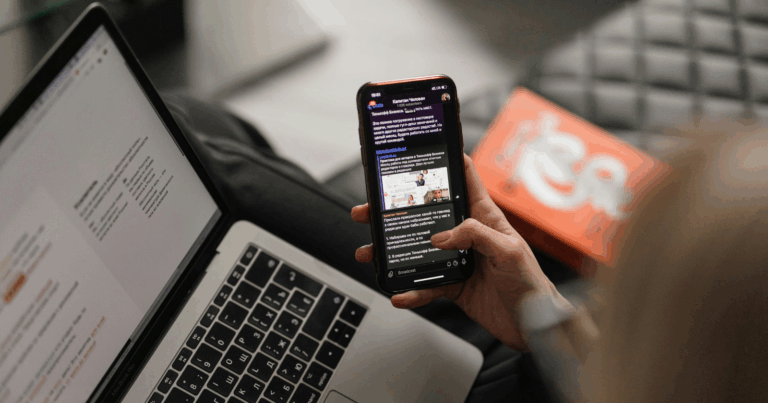


I remember sitting at my desk at 2 AM, exhausted, watching my Twitter feed refresh for the hundredth time. I’d just spent three hours reformatting a Vessel article for Medium, LinkedIn, Facebook, and Instagram. Different character counts. Different image crops. Different link formats. I told myself I was “maximizing reach.” I told myself this was strategic distribution.
I was lying to myself.
The metrics told the real story. A handful of likes here. A couple of comments there. Nothing that moved the needle. Nothing that built momentum. I wasn’t distributing content—I was scattering it. And worse, I was calling that scattering a strategy.
Cross-posting has become the default move for content creators who want to “be everywhere.” Post your blog article, then copy-paste it to Medium. Share it on LinkedIn. Thread it on Twitter. Repurpose it for Instagram carousels. The logic seems sound: more platforms equal more eyeballs. But that logic confuses presence with impact. It mistakes activity for strategy.
Here’s what nobody wants to admit: most cross-posting is procrastination disguised as productivity. It’s the work you do when you’re afraid to do the harder work—the work of actually building an audience somewhere specific, or creating something genuinely new for a different context.
What cross-posting actually is
At its core, cross-posting means taking the same piece of content and publishing it across multiple platforms with minimal adaptation. You write a blog post, then you publish that same post, maybe with minor tweaks, to Medium, LinkedIn Articles, Substack, your Facebook page, and anywhere else you have a presence.
The appeal is obvious. You’ve already done the hard work of creating something. Why not get more mileage out of it? Every platform you add feels like free real estate. More places for Google to index you. More chances for someone to stumble across your work.
But here’s what’s actually happening. You’re not creating multiple distribution channels. You’re creating multiple dead ends.
Each platform has its own culture, its own discovery algorithm, its own expectations for what works. When you drop identical content across all of them, you’re essentially showing up to different parties wearing the same outfit and telling the same stories, wondering why nobody’s engaging.
I’ve watched this play out dozens of times with creators I’ve worked with at Ideapod and The Vessel. They’ll publish a thoughtful 2,000-word essay on their blog, then post the exact same thing to Medium. The Medium version gets lost in the sea of content because it wasn’t written for Medium’s recommendation algorithm. It doesn’t have the hooks or structure that Medium readers expect. So it flatlines.
Then they post a link to LinkedIn with a generic caption. LinkedIn’s algorithm sees a link that takes people off-platform and deprioritizes it. Another dead end.
The Instagram carousel uses the same language as the blog post, but Instagram audiences want different pacing and visual storytelling. They scroll past.
By the end of this cycle, the creator has spent hours cross-posting and has nothing to show for it except the illusion of being productive. They can tell themselves, “Well, at least I posted everywhere.” But they didn’t actually distribute anything. They just made copies.
Why this feels like strategy (but isn’t)
The reason cross-posting feels strategic is that it aligns with two deeply ingrained creator beliefs.
First, that consistency matters. Second, that you need to “meet your audience where they are.”
Both of these are true—to a point. Consistency does matter. But consistent mediocrity across eight platforms is worse than focused excellence on two. And yes, you should meet your audience where they are. But if you don’t know where they actually are, you’re not meeting them. You’re hoping they’ll find you.
Hope is not a distribution strategy.
Real distribution strategy starts with understanding where your specific audience actually lives and what they need from you on each platform.
A creator who understands LinkedIn knows that LinkedIn rewards original text posts with no outbound links. Medium rewards narrative-driven pieces that hold attention. Twitter rewards condensed thinking and conversation-starters. Instagram rewards visual storytelling.
These aren’t just different formats. They’re different value propositions. When you cross-post, you’re ignoring those value propositions. You’re saying, “I made this thing once, and I’m going to make it work everywhere.” That’s not strategy. That’s stubbornness.
The deeper issue is that cross-posting often becomes a substitute for the harder work of building real distribution. Real distribution means cultivating relationships with specific communities. It means understanding platform algorithms well enough to work with them instead of against them. It means creating content that serves a purpose beyond “I need to post something today.”
When I look back at the times Ideapod’s content actually broke through, it was never because we cross-posted. It was because we created something specifically for a platform’s culture and then engaged with the responses. We’d publish a provocative idea on Medium that sparked debate in the comments. We’d share a vulnerable story on LinkedIn that people felt comfortable resharing. We’d create a Twitter thread that asked a question people wanted to answer.
None of that happens with cross-posting because cross-posting is fundamentally transactional. You’re not there to participate—you’re there to broadcast. And audiences can tell the difference.
The hidden costs nobody mentions
Beyond the obvious time sink, cross-posting has costs that compound over time in ways most creators don’t recognize until it’s too late.
First, it dilutes your authority. When someone encounters your content on three different platforms in the same week, they don’t think, “Wow, this person is everywhere.” They think, “Why do I keep seeing this same thing?” You start to look desperate instead of authoritative. You look like someone who’s yelling into the void instead of someone who has something worth listening to.
Second, it confuses your SEO. Google doesn’t reward duplicate content. When you publish the same article on your blog, Medium, LinkedIn, and Substack, you’re competing with yourself. Google has to choose which version to rank, and often none of them rank well because the signals are split. You’re better off having one strong, well-promoted piece than four mediocre copies scattered across the internet.
Third—and this is the one that hurt me most—it prevents you from learning what actually works. When you cross-post, you can’t get clear feedback about what resonated and why. Did that piece fail because the idea was weak, or because Instagram was the wrong platform for it?
You’ll never know, because you posted it everywhere and it failed everywhere. You’ve learned nothing except that cross-posting doesn’t work, which you could have figured out faster by focusing on one platform and actually studying the results.
The final cost is opportunity. Every hour you spend reformatting and cross-posting is an hour you’re not spending on creation, relationship-building, or strategic thinking. It’s busywork that makes you feel productive while keeping you from the work that would actually move your career forward.
I learned this the hard way when I calculated how much time I’d spent cross-posting in a single month. Eighteen hours. Eighteen hours of copying, pasting, reformatting, and uploading. For what? A few hundred extra impressions that led nowhere.

If I’d spent those eighteen hours writing one genuinely excellent piece, or building relationships with ten key people in my niche, or studying one platform’s algorithm in depth, I’d have seen actual returns.
What distribution actually looks like
Real distribution isn’t about being everywhere. It’s about being effective somewhere, then strategically expanding from there.
The creators building sustainable media businesses focus intensely on one or two platforms where they can own their audience relationship. They create content specifically for those platforms, study what resonates, double down on what works, and build genuine community around their ideas.
Then, and only then, do they think about expansion. And when they do expand, they don’t copy-paste. They adapt. They ask, “What would make this idea work on this new platform?” They create new value instead of recycling old value.
This is how distribution compounds. You build authority on one platform. That authority gives you credibility when you show up somewhere new. Your existing audience helps seed engagement on the new platform. You’re not starting from zero—you’re extending from a position of strength.
But that only works if you’ve actually built something worth extending. If you’ve been cross-posting, you haven’t built anything. You’ve just made noise.
The path forward isn’t more platforms. It’s more intentionality. Pick one platform where your specific audience lives. Learn that platform’s culture and algorithm. Create content that serves that platform’s users in ways they value. Build relationships. Get feedback. Iterate. Become someone that platform’s users recognize and trust.
Once you’ve done that—once you actually have distribution—then you can think about where else your ideas might find audiences. But you’ll approach it differently. You won’t cross-post. You’ll ask what unique value you can create for each new audience. You’ll treat expansion as strategy, not hope.
The question that changes everything
The next time you’re about to cross-post something, ask yourself one question: “Am I creating value for this specific audience, or am I just checking a box?”
If the answer is anything other than “creating value,” don’t post it.
This doesn’t mean you can’t repurpose ideas. You absolutely should. But repurposing means rethinking and recreating, not copying and pasting. It means taking the core insight from a blog post and turning it into a Twitter thread that sparks conversation. It means adapting a newsletter into a LinkedIn post that speaks to that platform’s professional context. It means creating something new from something old, not just duplicating what already exists.
The hardest part of this shift is accepting that you might have less “output” initially. You’ll post less frequently. You’ll be on fewer platforms. That can feel scary when you’ve been conditioned to believe that more is always better.
But here’s what I know after years of doing this: quality of attention beats quantity of impressions every single time. One hundred people who genuinely engage with your work are worth more than ten thousand who scroll past it. One platform where you have real influence is worth more than eight platforms where you’re invisible.
Cross-posting is what you do when you don’t know what else to do. Real distribution is what happens when you stop hoping and start building.