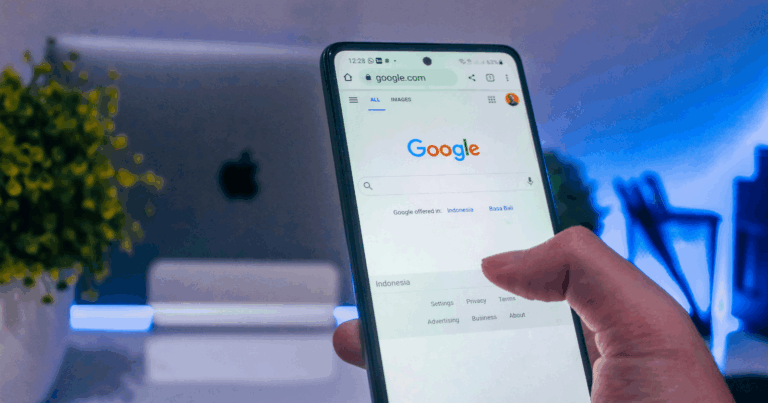


There’s a particular kind of denial happening across the blogging industry right now, and it’s costing people real money. Publishers are still writing content briefs based on keyword gaps. Still building editorial calendars around search volume. Still treating Google as a reliable distribution partner that sends traffic in exchange for quality content. That deal is over. Google didn’t cancel it with an announcement. It cancelled it with an AI summary box that answers the user’s question before they ever see your headline.
The numbers are no longer ambiguous. Zero-click searches rose from 56% to 69% between May 2024 and May 2025, according to Similarweb. When AI Overviews appear — and they now trigger on roughly 13–16% of all searches — organic click-through rates drop by as much as 61%, according to Seer Interactive’s analysis of over 25 million organic impressions. Pew Research tracked 68,000 real search queries and found that users clicked through just 8% of the time when an AI summary was present, versus 15% without one.
If you’re a blogger still building your strategy around the assumption that ranking equals traffic, you’re optimising for a machine that has fundamentally changed what it does with your content.
The old deal is broken
For two decades, the value exchange between publishers and Google was straightforward. You create content, Google indexes it, users click through to your site, and you monetise that attention through ads, affiliates, or subscriptions. Both sides benefited. Google got a useful index. You got distribution.
AI Overviews broke that exchange. Google still indexes your content. It still uses your expertise to generate answers. But increasingly, it delivers those answers directly on the search results page — synthesised, summarised, and stripped of any reason for the user to visit your site.
The Daily Mail’s SEO director told Press Gazette that when an AI Overview appears, their click-through rate drops 56% on desktop and 48% on mobile. Digital Content Next’s study of 19 premium publishers found median year-over-year referral traffic from Google Search declined 10%, with non-news brands down 14%. HubSpot reportedly lost 70–80% of its organic traffic. Forbes, despite ranking for thousands of keywords, lost half its traffic.
These aren’t niche sites with weak SEO. These are category leaders executing best-practice strategies — and watching those strategies deliver diminishing returns because the platform itself has changed.
The problem isn’t your content. It’s your distribution model.
Here’s what I want bloggers to understand clearly: the content you’re creating may be excellent. The SEO fundamentals may be sound. But if your entire business model depends on Google sending strangers to your site so you can monetise their attention, you’re building on ground that’s actively shifting beneath you.
The informational queries that have historically powered blog traffic — “how to,” “what is,” “best practices” — are exactly the queries AI Overviews are designed to absorb. Amsive reported a 19.98% decline in CTR for non-branded keywords specifically. These are the bread-and-butter searches that content marketers have optimised for since the dawn of SEO.
And the emerging data suggests this isn’t limited to queries with AI Overviews. Seer Interactive’s September 2025 update found that even queries without AI Overviews are losing click-through rates, down 41% year-over-year. The entire search ecosystem is changing how users interact with results, and the old playbook is eroding everywhere — not just where the AI box appears.
What actually works now
This isn’t a call to abandon SEO. Organic search still drives 53% of all website traffic, and it still converts significantly better than paid channels. But the strategy needs to shift from traffic acquisition to audience ownership, and from ranking to recognition.
Build direct relationships first. Email lists, paid subscriptions, community memberships — these are channels where you own the connection. When Google changes its algorithm or expands AI Overviews into your niche, your email subscribers are still there. The publishers weathering this transition best are the ones who treated their blog as a lead generation tool for an owned audience, not as the end product itself.

Create content that can’t be summarised. AI Overviews are effective at answering factual, informational queries. They’re far less effective at replacing original analysis, first-person expertise, proprietary data, or narrative journalism. The content that survives the zero-click era is the content that gives readers a reason to want the full version, not just the answer. If your article can be reduced to a three-sentence summary without losing its value, it’s vulnerable.
Diversify your traffic sources aggressively. Google Discover, newsletters, YouTube, LinkedIn, podcast cross-promotion, direct traffic through brand recognition — the publishers growing in 2025 are the ones drawing from multiple channels rather than depending on one. Reddit’s traffic grew to 1.4 billion monthly visits by mid-2025, partly because its user-generated content aligns with what AI systems surface. Platforms that produce authentic, experience-based perspectives are being rewarded in ways that traditional SEO content is not.
Think in terms of citation, not ranking. The Seer Interactive data revealed something worth paying attention to: brands cited within AI Overviews see 35% more organic clicks than those that appear in the same results but aren’t cited. Being referenced as an authority inside the AI answer is becoming more valuable than ranking in position one below it. This means E-E-A-T signals — experience, expertise, authoritativeness, and trustworthiness — matter more than ever, not as an SEO checklist item but as a genuine competitive advantage.
The uncomfortable truth about what comes next
Google processes over nine billion searches per day. That number is growing. Search as a behaviour isn’t dying. But the relationship between a search happening and a publisher benefiting from it is weakening with every AI expansion.
Industry analysts predict AI search visitors will surpass traditional search visitors by early 2028. If Google makes AI Mode the default experience, that timeline compresses further. The publishers who adapt now — shifting investment toward owned audiences, differentiated content, and multi-channel distribution — will be positioned for that transition. The ones still pouring resources into keyword-optimised articles designed for a search experience that’s disappearing will find themselves producing content for a machine that no longer needs to send anyone their way.
The Google you optimised for in 2019 was a referral engine. The Google of 2025 is an answer engine. Those are fundamentally different products, and they require fundamentally different strategies. The sooner that distinction becomes the basis of your editorial planning rather than an abstract concern you’ll get to eventually, the better your chances of still being in this business when the transition is complete.