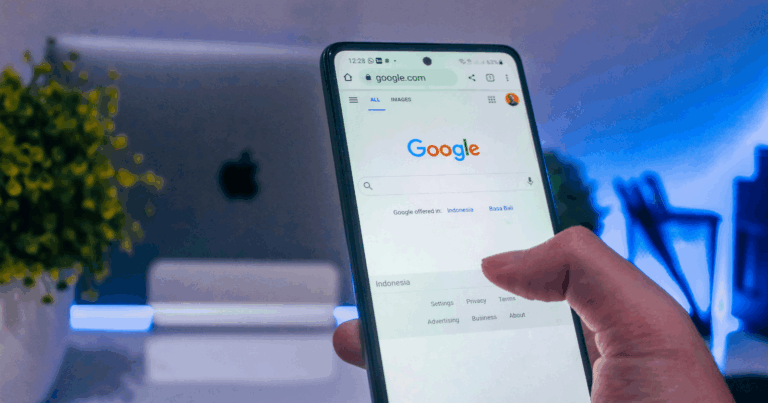


Google AI Mode crossed 100 million monthly active users in early 2026 — a fourfold increase since its May 2025 launch. Daily usage per user has doubled. The average AI Mode query is 7.22 words long, roughly three times longer than a traditional Google search.
And here is the figure that matters most to anyone who publishes content on the open web: 93% of AI Mode sessions end without the user clicking on any external website.
This is not a beta experiment buried in Google Labs. AI Mode is a mainstream search product running alongside AI Overviews, which already reaches 2 billion monthly users across more than 200 countries and appears on roughly half of all search queries. Together, they represent a fundamental restructuring of how Google sends — or, increasingly, doesn’t send — traffic to publishers.
For bloggers, the implications are no longer hypothetical. The traffic model that sustained independent publishing for two decades is being dismantled in real time, and the data arriving in 2026 makes the scale of the shift impossible to ignore.
What the traffic data actually shows
The decline has been building for more than a year, but the 2026 numbers have sharpened the picture considerably.
Chartbeat data published in the Reuters Institute’s 2026 trends report showed that Google search traffic to publishers fell by a third globally between November 2024 and November 2025, and by 38% in the United States. Google Discover referrals dropped 21% in the same period. Media executives surveyed by the Reuters Institute now expect search referrals to decline by a further 43% over the next three years. A fifth of respondents project losses above 75%.
Independent research tracked by Search Engine Journal found click-through rate reductions of 34% to 46% when AI summaries appear on results pages. A Pew Research Center study tracking 68,000 real queries found users clicked on results just 8% of the time when AI summaries were present, compared to 15% without — a 46.7% relative reduction. DMG Media, publisher of the Daily Mail and Metro, reported click-through rate declines of up to 89% for certain search categories.
Analysis of AI Mode citation patterns reveals another layer of the problem. Nearly one in five citation links within AI Mode responses points back to another Google property — Maps, YouTube, Shopping, News. And 59% of AI Mode citations direct users to organic Google search results pages rather than external websites, meaning the system effectively routes traffic deeper into Google’s own ecosystem rather than out to the open web.
Which content gets hit hardest
The damage is not evenly distributed. Content categories that depend on informational queries — the bread and butter of most independent blogs — are absorbing the steepest losses.
Travel guides, recipe sites, product comparisons, how-to content, and educational resources face the greatest exposure because these are exactly the queries AI systems can resolve without requiring a click-through. When someone searches “best things to do in Lisbon” or “how to fix a leaking faucet,” AI Mode can synthesize an answer from multiple sources and present it as a complete, conversational response. The blog that originally researched and wrote that information may be cited in a footnote — or may not appear at all.
Chegg, the education platform, reported a 49% decline in non-subscriber traffic between January 2024 and January 2025, directly attributable to AI Overviews answering the study-related queries that had previously driven users to its site. The company filed an antitrust lawsuit against Google in February 2025, alleging that Google used publisher content to train AI systems that now compete directly with those publishers.
Lifestyle and utility content — weather, TV listings, recipes, travel logistics — has been hit harder than hard news, partly because Google has so far largely exempted breaking news queries from AI Overviews due to the risk of hallucination. But that exemption is a policy decision, not a technical limitation, and there is no guarantee it will persist.
The counterargument — and what it misses
Google maintains that AI Overviews drive more clicks to supporting websites than traditional search when those sites appear within the overview. Some data supports a version of this claim. Research from Seer Interactive found that brands cited within AI Overviews earned 35% more organic clicks than brands that were not cited. AI Mode traffic that does reach external sites reportedly converts at 14.2% compared to 2.8% for traditional search traffic, with visitors spending 38% longer on site.
But this framing obscures the essential problem. The total volume of traffic reaching external sites is declining sharply, even if the quality of remaining traffic is higher. A blogger whose site receives 50% fewer visits but with better engagement per visit still has 50% fewer ad impressions, 50% fewer affiliate clicks, and 50% fewer email signups. For publishers monetized through display advertising — which remains the primary income source for the majority of independent bloggers — higher per-visit quality does not compensate for collapsing volume.

The Reuters Institute found that publisher confidence in journalism’s future has dropped to 38%, down from 60% four years ago. Most publishers surveyed plan to reduce investment in traditional Google SEO in 2026. The direction they are moving instead — original investigations, contextual analysis, community building, video, direct audience relationships — reflects an industry-wide acceptance that the search traffic era is ending.
What this means for bloggers right now
The strategic implications for independent publishers are straightforward, even if the execution is not.
The display-ad-plus-organic-search model is no longer a reliable foundation. Bloggers who depend on Google for the majority of their traffic and monetize primarily through ad networks face the most acute version of this problem, and the data suggests it will get worse before it stabilizes.
The publishers showing resilience in 2026 share common characteristics: they built email lists before the traffic decline began, they diversified into revenue streams that are audience-dependent rather than traffic-dependent — paid newsletters, memberships, digital products, direct sponsorships — and they invested in content formats that resist AI summarization: first-person expertise, original reporting, proprietary data, and subjective recommendations that require the reader’s trust in a specific author.
None of this is easy. And none of it guarantees survival. But the alternative — continuing to build primarily on a traffic source that is actively being redirected into a closed ecosystem — is a bet against the data.
Google AI Mode reaching 100 million users is not the beginning of this shift. But it is the point at which the numbers become difficult to explain away. The question for every blogger and independent publisher is no longer whether the traffic model is changing. It is whether the adjustments they are making will be fast enough to matter.