

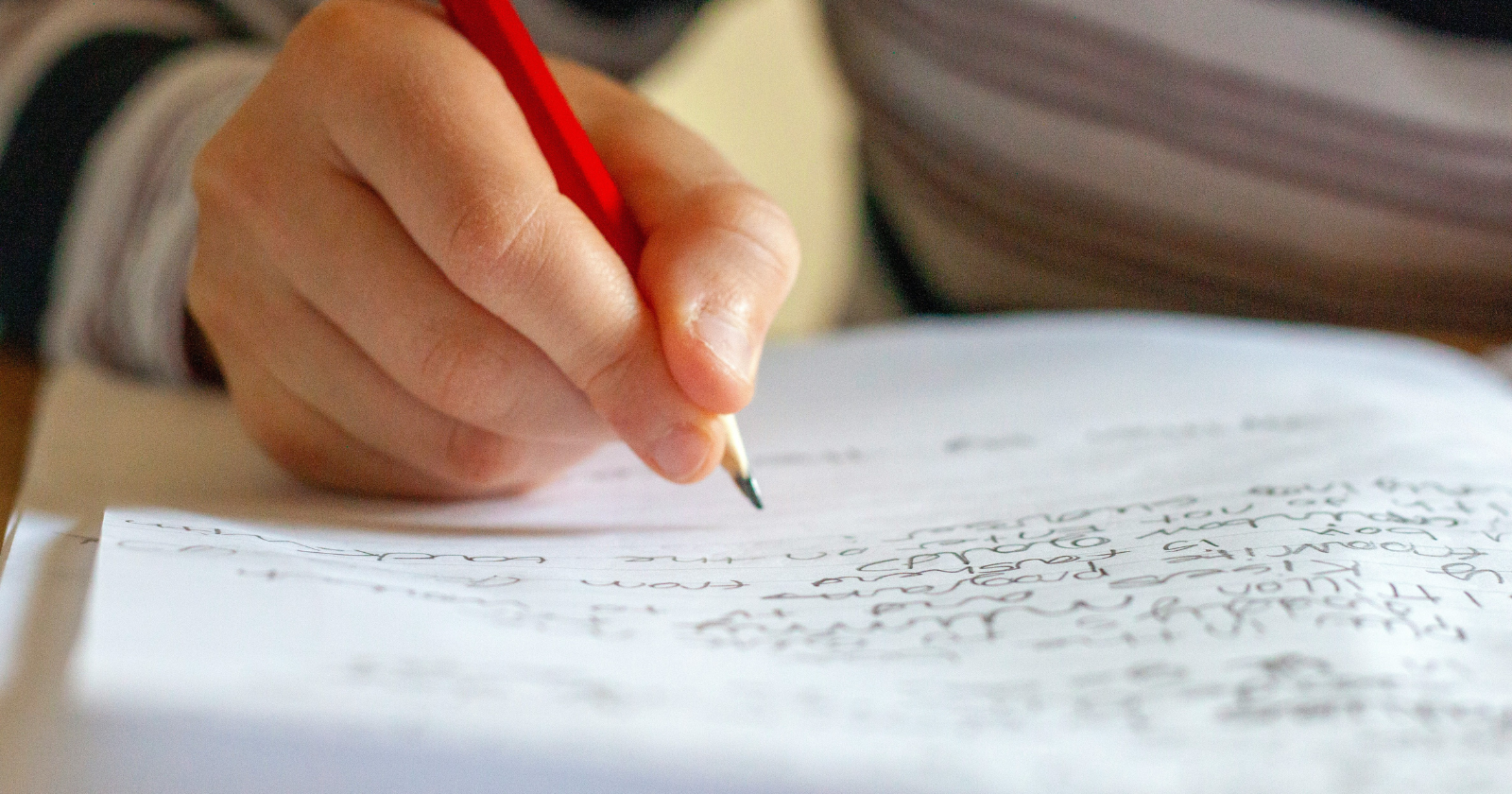
Remember when smartphones first came out and everyone said we’d never need to write by hand again?
I bought into that completely. For years, I typed everything – meeting notes, journal entries, even my grocery lists. My handwriting deteriorated to the point where I could barely read my own signature.
But then something interesting happened. During a particularly stressful period, I found myself reaching for a pen and paper instead of my laptop. It felt different somehow. Slower, yes, but also more… real. Like my thoughts were actually landing somewhere instead of just floating through digital space.
Turns out, there’s a reason for that feeling.
The neuroscience behind the pen
When I started digging into the research during my psychology studies, I discovered something that completely changed how I think about writing.
Our brains aren’t just passively recording information when we write by hand. They’re actually working in a fundamentally different way than when we type.
Think about it: when you type, you’re pressing identical buttons regardless of what letter you’re forming. But when you write by hand, every single letter requires a unique set of movements. Your brain has to coordinate visual processing, motor control, and spatial awareness all at once.
Elizabeth Mateer, Ph.D., a Neuropsychology Fellow at Harvard Medical School, puts it perfectly: “Handwriting engages motor, language, and attention systems, activating the brain more fully than typing.”
This isn’t just about nostalgia or holding onto old ways. It’s about neural networks lighting up like a Christmas tree when you put pen to paper.
Why memory works differently with handwriting
Have you ever noticed how you remember things better when you write them down by hand?
There’s a biological reason for that. When we write by hand, we’re creating what neuroscientists call “motor memories” alongside the conceptual ones. Your brain literally encodes the physical act of writing along with the information itself.
I experienced this firsthand when I was studying for my psychology degree. I’d tried every digital note-taking app out there, convinced that searchable, organized digital notes would be superior. But I kept forgetting key concepts during exams.
Then I switched back to handwritten notes for one particularly challenging course on cognitive neuroscience. The difference was immediate and dramatic. Not only did I remember the material better, but I could actually visualize where on the page I’d written specific concepts.
The research backs this up. Studies consistently show that students who take notes by hand perform better on conceptual questions than those who type. It’s not about writing more – typists usually capture more raw information. It’s about processing that information at a deeper level as you write.
The hidden workout your brain gets from handwriting
Here’s something that blew my mind when I first learned it: handwriting is essentially a full-brain workout disguised as a simple task.
When you write by hand, you’re not just using the language centers of your brain. You’re activating regions responsible for working memory, spatial processing, and executive function. It’s like the difference between walking on a treadmill and hiking through varied terrain – one engages your whole body in complex ways, while the other is repetitive and predictable.
I notice this most clearly in my morning writing routine. When I journal by hand (which I keep separate from my public writing), my thoughts seem to develop and connect in ways they simply don’t when I’m typing. There’s something about the slower pace that allows for deeper processing.
Sometimes I’ll start writing about one thing and end up somewhere completely unexpected. The physical act of writing seems to unlock associations and insights that remain hidden when I’m typing at speed.
How to bring handwriting back without going full luddite
Look, I’m not suggesting we all throw away our keyboards and go back to writing everything by hand. That’s neither practical nor necessary.
But there are strategic ways to incorporate handwriting that can seriously upgrade your cognitive game.
Start with your most important thinking tasks. When I’m brainstorming ideas for articles or working through complex problems, I always start with pen and paper. There’s something about the freedom to draw arrows, circle things, and write in the margins that digital tools still can’t replicate.
Meeting notes are another goldmine opportunity. Yes, you’ll capture less verbatim information, but you’ll understand and remember what matters. I’ve found that handwritten meeting notes force me to actively listen and synthesize in real-time rather than mindlessly transcribing.

Keep a small notebook with you. Not for everything, but for those moments when you really want to capture and process an idea. I carry one everywhere now, and it’s become my external brain for insights that pop up throughout the day.
And here’s a tip from my book Hidden Secrets of Buddhism: How To Live With Maximum Impact and Minimum Ego – treat handwriting as a form of mindfulness practice. The physical act of writing can be meditative, pulling you into the present moment in a way that typing rarely does.
The future isn’t either/or
What fascinates me most about this research is how it’s changing the conversation around technology and cognition.
For years, we’ve been told that digital is always better, more efficient, more advanced. But neuroscience is revealing that our brains evolved with certain inputs and processes that can’t simply be optimized away.
The most successful people I know aren’t choosing between analog and digital – they’re strategically combining both. They type when speed matters, but they write by hand when depth matters.
They recognize that efficiency isn’t always effectiveness, especially when it comes to learning, creativity, and memory.
Final words
The next time someone sees you writing by hand and makes a comment about being old-fashioned, you can smile knowing you’re actually engaging in one of the most sophisticated cognitive exercises available.
Your brain isn’t just recording information – it’s building stronger neural pathways, creating richer memories, and processing meaning at a level that typing simply can’t match.
I still type most of my published work (including this article), but handwriting has become my secret weapon for deeper thinking. My morning journal, my brainstorming sessions, my important notes – they all happen with pen and paper now.
Try it for yourself. Pick one area where you normally type and switch to handwriting for a week. Maybe it’s your daily planning, maybe it’s meeting notes, maybe it’s journaling. Pay attention to how it feels different, how your thoughts flow differently, how you remember differently.
Because in a world that’s constantly pushing us to go faster, sometimes the most radical thing we can do is slow down and write by hand.