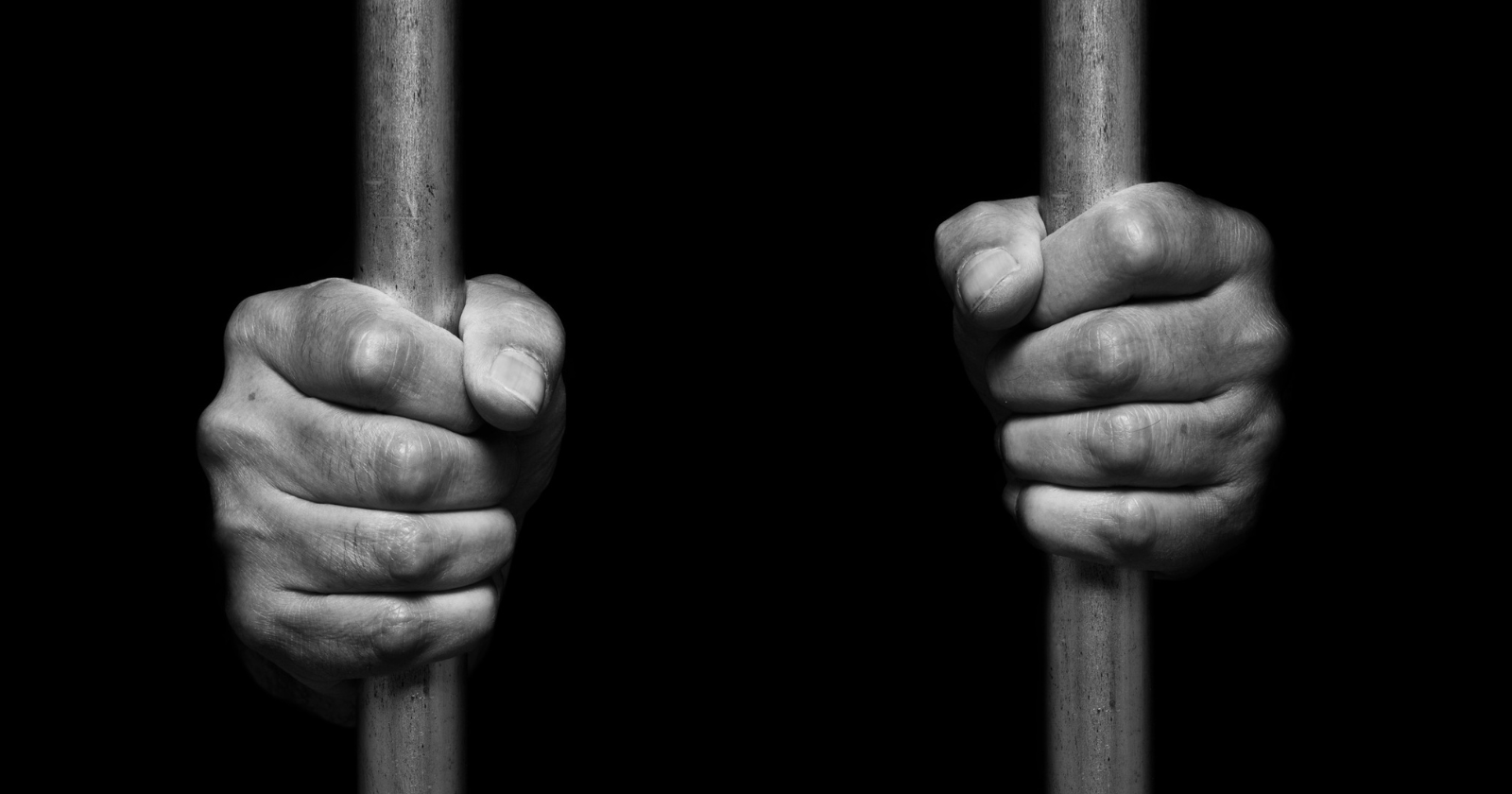
What we know with certainty is this: On March 18, Omid Reza Mir Sayafi died in Evin Prison in Tehran. In December, he had been sentenced to two and a half years for allegedly insulting religious leaders and engaging in propaganda against the Islamic Republic. He was still awaiting an additional trial for insulting Islam when he died.
His death occurred during a period when Evin held multiple high-profile journalists and bloggers, including Iranian-American journalist Roxana Saberi, whose detention that same year drew international attention to the prison’s treatment of media professionals.
Seventeen years later, as I write this in 2026, that distinction remains as chilling as it is significant. Because what happened to Omid wasn’t an aberration. It was a harbinger of what was coming for digital expression worldwide.
I think about Omid often when I consider what we’ve built with the internet. We promised ourselves a democratization of voice, a flattening of power structures, a world where anyone could speak and be heard. And in many ways, we achieved exactly that.
But we never fully reckoned with the counterforce that would emerge: the systematic, increasingly sophisticated suppression of those voices by governments that view independent thought as an existential threat.
The Committee to Protect Journalists documented 361 journalists behind bars as of December 1, 2024, the second-highest number since their global record in 2022. These aren’t just professional journalists working for established outlets. They’re bloggers, podcasters, citizen journalists, people who picked up a phone or opened a laptop and decided their community deserved to know the truth. More than 60 percent face broad anti-state charges, often vague accusations of terrorism or extremism that can mean anything authorities want them to mean.
The numbers are clinical. They don’t capture what it means to be imprisoned for writing. They don’t convey the particular cruelty of being punished for arranging words on a screen, for the act of thinking publicly, for refusing to stay silent.
When Omid died, Iran was already known as one of the world’s worst jailers of journalists. Today, China, Myanmar, Belarus, Russia, and Israel lead the rankings, but the phenomenon has metastasized across continents and political systems.
What strikes me most about Omid’s story isn’t just the tragedy of his death. It’s what he wrote in 2006, three years before he died, about another political prisoner who had died in Evin: “Whether he died a natural death or was killed under torture, does not matter. He is no longer among us. I wish you a peaceful journey. Trust me, you won’t be missing many things in here.”
In writing those words, Omid penned his own eulogy. He knew. On some level, he understood the cost of honesty in a system built on enforced silence.
And yet he kept writing.
This is what we don’t talk about enough when we celebrate the power of digital platforms: the people for whom pressing “publish” is an act of profound courage, sometimes a death sentence. We’ve built tools that make sharing ideas frictionless, but we haven’t built the protections that would make that sharing safe for everyone who uses them. The architecture of modern social platforms assumes a certain baseline of freedom that simply doesn’t exist in much of the world.
There’s a particular vulnerability that comes with being a blogger or independent digital creator. Traditional journalists working for established outlets have organizational resources, press credentials, legal teams, and international advocacy networks. When they’re imprisoned, their organizations mobilize.
But bloggers, as the Committee to Protect Journalists noted in 2009, don’t have that infrastructure. When authorities knock on their door, they’re alone. The very independence that makes blogging powerful makes bloggers exceptionally vulnerable.
Omid told people he identified with his protagonist, a young man struggling against injustice. After spending twenty days in solitary confinement at Evin, he wrote: “I came out of the prison another Omid-Reza.” The experience changed him fundamentally. Yet he also wrote: “I have never been a person who would stoop to self-censoring and will never be. I’d rather not write at all if I have to stop being frank and honest in my words.”
This is the impossible choice authoritarian systems force on independent voices: silence or danger. Authenticity or safety. And for those who choose authenticity, the consequences can be absolute.
In the years since Omid’s death, we’ve seen the patterns repeat with variations. In 2024, Chinese blogger Yang Hengjun received a suspended death sentence that could be commuted to life imprisonment. His crime? Writing about U.S.-China relations and political reform. In Myanmar, reporters receive 20-year sentences for covering cyclones. In Russia, journalists face “fake news” charges for reporting facts about war. The tactics evolve, but the core dynamic remains: power punishing truth.
What haunts me is not just that these things happen, but how normalized they’ve become. We scroll past headlines about imprisoned journalists with the same numbed attention we give to other forms of distant suffering.
The Committee to Protect Journalists noted that 550 journalists were imprisoned worldwide as of their 2024 count, a 7 percent increase from the previous year. The numbers climb, and we register them as statistics rather than as 550 individual humans in cells, separated from their families, punished for the act of witnessing and sharing what they witnessed.
After Omid’s death, activists created the March 18 Movement to ensure he would be remembered and to advocate for persecuted bloggers globally. It was meant to ensure that Omid would be the first and last blogger to die in prison. That hope proved tragically optimistic. He wasn’t the last. Since 2009, other bloggers have died in detention in Bahrain, Brazil, and elsewhere. The list grows longer.
What does it mean to blog, to write, to create content in 2025 knowing this history? I think it requires us to hold two truths simultaneously.
First, that digital platforms have genuinely democratized access to public discourse in ways that matter profoundly. More voices can be heard now than at any point in human history. That’s real. That’s powerful.
Second, that this democratization has provoked fierce backlash from systems that depend on controlling information. The same tools that empower also expose. The same visibility that amplifies also endangers.
For those of us who write from positions of relative safety, in countries where criticizing leaders might earn social media harassment but not imprisonment, there’s a responsibility to remember the Omids of the world. To recognize that our ability to write freely, to question openly, to publish without fear, is not universal. It’s conditional on geography, on political systems, on luck.
The contemporary digital creator economy tends to focus on growth metrics, engagement rates, monetization strategies. These aren’t unimportant.
But they exist in a bubble of assumed safety that doesn’t reflect the reality for millions of people whose digital expression carries existential risk. When we talk about “authentic content” and “finding your voice,” we’re usually not talking about the kind of authenticity that could cost you your freedom or your life.
Omid specialized in traditional Persian music. He wrote poetry. He contributed to Persian-language electronic art journals. He was apparently well-known in Iranian intellectual circles. None of this protected him.
In the end, what mattered to the authorities wasn’t his expertise or his contributions to cultural discourse. What mattered was that he had a voice, and he used it in ways they found threatening.
The challenge for those of us thinking seriously about digital publishing and blogging in 2025 is to hold space for both the enormous potential of these platforms and their equally enormous risks for certain users.

We can celebrate the democratization of media while acknowledging that democracy itself is under siege in much of the world, and that the tools we use to express ourselves can be weaponized against us by authoritarian systems.
There’s something particularly bitter about the fact that the internet, designed to route around censorship, has become a surveillance tool that makes identifying and imprisoning dissidents more efficient than ever before. Every blog post, every social media update, every comment leaves a digital trail. In free societies, that persistence enables accountability and builds community. In repressive societies, it builds dossiers.
Omid died waiting for an additional trial for insulting Islam. He never got that trial. What he got was a prison clinic that gave him medication for depression but refused to hospitalize him when his cellmate, a doctor, begged them to. What he got was a system designed not to rehabilitate or even to punish fairly, but to break people who dared to think and speak independently.
When I consider what we owe to Omid and the hundreds of journalists and bloggers currently imprisoned worldwide, I think it starts with refusing to normalize this. Refusing to let the numbers become just numbers.
Every one of those 361 imprisoned journalists is someone with a name, a story, people who love them, ideas they wanted to share. They’re not abstract casualties of geopolitics. They’re human beings who made the same choice many of us make every day, to sit down and write, except for them the consequences were catastrophic.
It also means being honest about the limitations of the platforms and systems we’ve built. Silicon Valley talks endlessly about “connecting the world” and “giving everyone a voice,” but it rarely grapples with what happens when giving someone a voice in an authoritarian state makes them a target. The infrastructure exists to share words globally, but not to protect the people sharing them.
Perhaps most importantly, it means recognizing that press freedom and digital freedom aren’t abstract principles. They’re matters of life and death.
Omid’s story isn’t ancient history. It’s ongoing. The mechanisms that killed him are still operating, still imprisoning people, still silencing voices. In 2024 alone, more than 100 journalists were newly jailed for their work. That’s more than two people per week losing their freedom for doing what journalists do.
Sixteen years after Omid Reza Mir Sayafi died in Evin Prison, the question we face as a global community of writers, bloggers, and digital creators is straightforward: what are we willing to do to protect the people who risk everything to tell the truth?
The tools we’ve built to democratize voice have succeeded beyond our wildest expectations. But tools without protections, platforms without safety, freedom without support, these things ring hollow when people die in prison for using them.
Omid wrote that he would rather not write at all than censor himself. He chose honesty over safety, authenticity over silence. In doing so, he became the first blogger to die in prison.
The question for all of us who benefit from the digital publishing revolution is whether we’re willing to fight to ensure he’s remembered, that the 550 currently imprisoned are freed, and that the tools we’ve built to share stories don’t become tools of oppression.
The words we write matter. For some people, they matter enough to die for. That’s not rhetoric. That’s the reality Omid lived and died in.
And until that reality changes, every word we publish in safety carries with it an obligation to remember those who published at a cost we can barely imagine.