This post was significantly updated in June 2025 to reflect new information. An archived version from 2009 is available for reference here.
It started with a simple intention: share a quiet, behind-the-scenes moment.
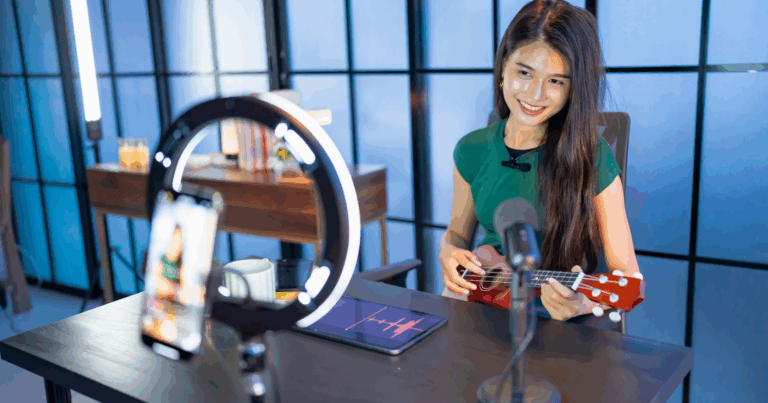
A creator I follow—an independent filmmaker—was livestreaming a prep session before a shoot. Casual, unedited, personal. During the stream, someone on the team played a song off their phone in the background. Just a few seconds. Hardly noticeable.
But the consequences were immediate. The stream was taken down. A copyright warning followed. Monetization was suspended temporarily.
What was meant to be an intimate peek behind the curtain turned into a legal headache.
If you’ve ever gone live on Instagram, YouTube, Twitch, or TikTok, chances are you’ve bumped up against the complex (and often invisible) world of copyright enforcement.
It’s not always malicious. In fact, most copyright violations during livestreams are accidental. A song playing in the background. A clip from a movie used for commentary. A logo on a T-shirt.
And yet, the platforms—and the law—don’t care much about intent.
This article won’t give you legal advice. But it will help you understand the contours of the problem, the kinds of mistakes that lead to takedowns, and how to livestream with clarity—not fear.
Because if content is still king, then copyright law is the land it sits on—and ignoring the rules can quietly cost you the kingdom.
What copyright looks like in a livestreaming context
Copyright, in essence, gives creators the exclusive right to use, reproduce, and distribute their original work. That includes music, film clips, visuals, artwork, even video game footage.
When you go live, you’re no longer just consuming media—you’re becoming a secondary broadcaster. And that shift activates a very different legal framework.
Livestreaming complicates things because:
-
It’s real-time. Mistakes happen quickly, and you can’t always edit them out.
-
Content can be replayed. Even if the stream is deleted later, platforms may store a copy and flag it.
-
Platforms automate enforcement. YouTube’s Content ID system, Facebook’s Rights Manager, and Twitch’s Audible Magic don’t wait for a human to flag an issue—they rely on algorithmic detection.
In 2021, Twitch made headlines when thousands of users received mass takedown notices for music played during past broadcasts. Many were confused: these were old clips, not malicious uploads. But copyright law applies retroactively—and platforms are increasingly proactive.
It’s not just major music labels pushing for enforcement. Individual artists, film studios, sports leagues, and even influencers are licensing their content and using AI tools to track where it’s used.
This isn’t just about lawsuits (though they do happen). It’s about stream takedowns, account suspensions, and lost income.
Case study: The DMCA and Twitch’s ongoing copyright tension
The most visible copyright crackdown in recent years has happened on Twitch.
In 2020, the platform faced pressure from the Recording Industry Association of America (RIAA), which issued thousands of Digital Millennium Copyright Act (DMCA) notices against streamers who used copyrighted music—even in the background.
The backlash was swift. Creators deleted years of content. Others left the platform entirely. Twitch responded by tightening its enforcement tools and offering creators a library of royalty-free music (Soundtrack by Twitch)—but the damage had already shifted the culture.
What’s notable is that many of the flagged streams weren’t performances. They were casual: a “Just Chatting” stream with music on in the background. A highlight clip with a trending song.
In short: the kind of unthinking use that happens when you don’t realize livestreaming is also publishing.
This wasn’t unique to Twitch. YouTube, TikTok, and Facebook have implemented similar tools—algorithms that scan livestreams for copyrighted material and either mute audio or remove the stream entirely.
The lesson? When you go live, you’re entering a heavily monitored space—whether you realize it or not.
The long-term risk: more than just a takedown
Losing a stream is inconvenient. Losing monetization is damaging. But the deeper issue is cumulative.
Repeated copyright violations—even unintentional ones—can lead to:
-
Loss of affiliate or partner status on platforms like Twitch and YouTube
-
Demonetization of entire accounts
-
Legal liability, particularly if you continue broadcasting after warnings
-
Brand trust erosion, especially if you’re working with sponsors who require clean legal history
The issue is compounded when creators repurpose livestream content for YouTube Shorts, Instagram Reels, or podcasts. What might’ve been a small violation in a one-time stream becomes a distributed infraction across multiple platforms.
And this isn’t just about music. Visual art in your background. Branded material. Clips used for commentary without clear legal protection. All of it adds up.
Common copyright mistakes livestreamers make
Most livestream copyright violations aren’t malicious. They’re casual. Unthinking. The kind of slip-ups that happen when you’re focused on entertaining an audience—not scanning your environment for potential IP risks.
But copyright law doesn’t distinguish between intention and outcome. And the systems enforcing it—algorithms, takedown bots, and platform policies—certainly don’t either.
Here are the most common ways livestreamers unknowingly step over the line, and how to avoid turning a spontaneous moment into a costly mistake.
1. Playing commercial music—even in the background
Many creators assume that short snippets or low-volume playback won’t be detected. But content detection systems aren’t bound by human nuance. If it hears Beyoncé—even faintly—it will flag it.

2. Streaming video game content without checking usage rights
While most major game studios allow streaming, some—especially in Japan—limit how much footage you can show or require explicit permissions. Atlus, Nintendo, and Square Enix have all issued takedowns in recent years.
3. Using “fair use” as a blanket excuse
Fair use is a legal defense—not a permission slip. It typically applies to commentary, parody, or critique. But it’s judged case-by-case in court—not by content platforms. Until then, the algorithm is judge, jury, and executioner.
4. Broadcasting events or performances
Livestreaming a concert, conference, or panel—even if you’re an attendee—can violate event licensing agreements. Always check the terms before going live.
5. Repurposing copyrighted content for clips
Even if the stream was okay, clipping highlights or uploading segments that contain protected material increases visibility—and risk.
How to livestream legally and safely (without killing creativity)
It’s easy to feel boxed in. The moment copyright enters the conversation, many creators default to one of two extremes: play it so safe the stream loses all personality—or ignore the rules entirely and hope for the best.
But legal awareness doesn’t have to mean creative paralysis.
The goal isn’t to flatten your content—it’s to give you the confidence to experiment without fear of takedowns, strikes, or demonetization. When you understand the boundaries, you’re free to push up against them with clarity and intention.
Here’s how to protect your work—and your platform—without sacrificing what makes your livestreams uniquely yours.
1. Use royalty-free or licensed music libraries
Platforms like Epidemic Sound, Artlist, and Soundstripe offer subscription-based music licenses designed for creators. Twitch’s own Soundtrack by Twitch is free and cleared for use.
2. Get permission—or stick to games that allow streaming
Sites like StreamerGuides maintain updated lists of game developer policies. When in doubt, reach out to the publisher.
3. Understand platform-specific rules
Each platform has different standards for enforcement. Familiarize yourself with YouTube’s Copyright Center, Twitch’s DMCA guidelines, and TikTok’s Community Guidelines.
4. Be mindful of what’s in frame
Background posters, TV screens, even books can trigger takedowns—especially if repurposed later for monetized content.
5. Keep a content log
Track what you use in each stream—especially third-party materials. This helps in case of future disputes and supports your claim of good-faith effort.
Final thoughts: Livestreaming with awareness, not anxiety
You don’t need to livestream in silence, surrounded by blank walls and royalty-free purgatory.
But you do need to be aware.
Awareness isn’t about censorship—it’s about creative sustainability. Knowing where the lines are helps you dance near them, or around them, with intention. And that’s where the best live content happens: not in fear of takedowns, but in command of the medium.
Livestreaming is real-time media. And like any media, it comes with responsibility. So the next time you go live, ask not just “What am I sharing?”—but “Whose work am I bringing with me?”
If you can answer that with clarity, you’re not just protecting your stream. You’re protecting your future.