
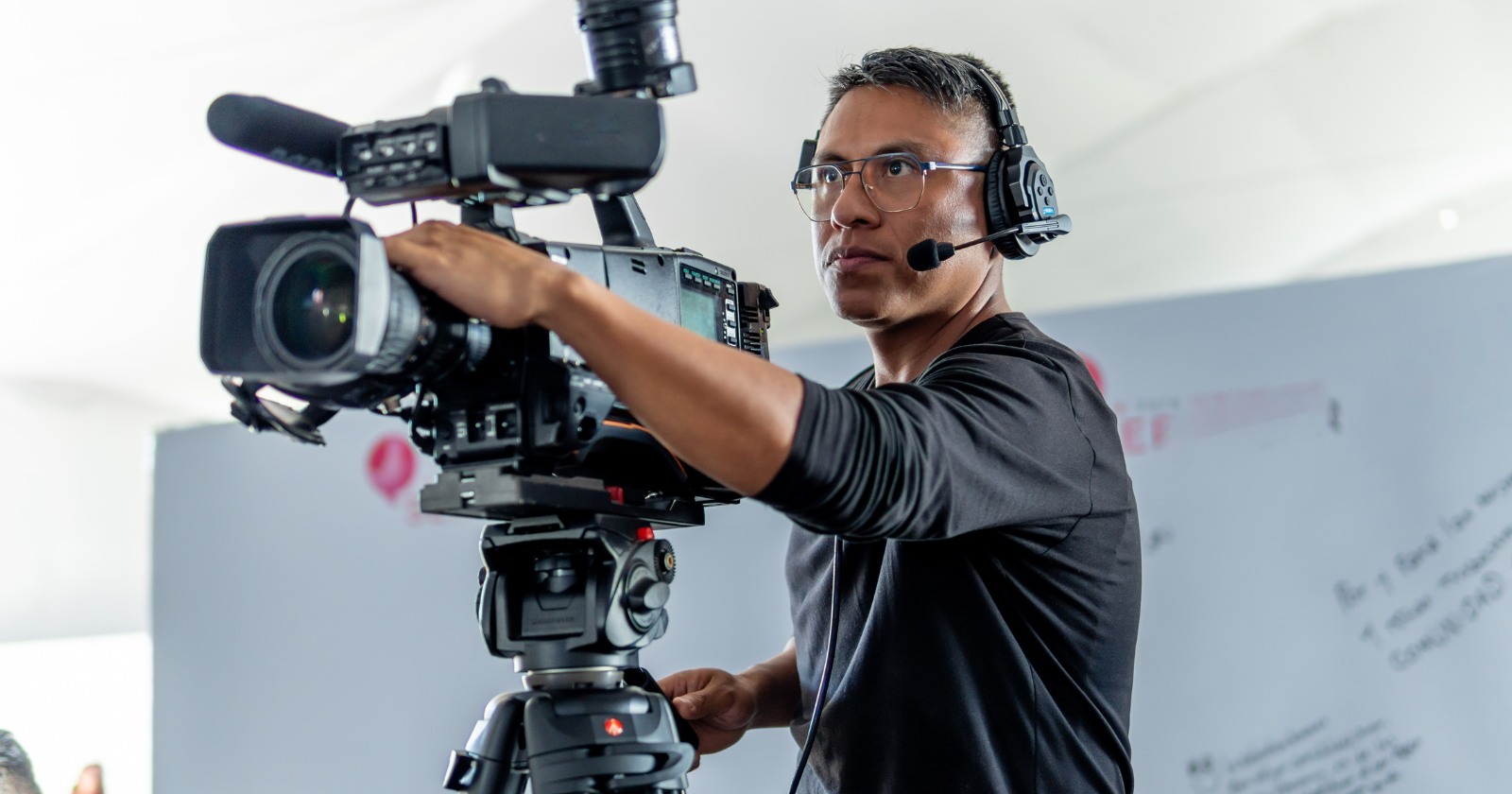
In 2023, a science fiction movie with an $80 million budget was shot almost entirely on a camera you can order from Best Buy for about $4,000. The Creator, directed by Gareth Edwards for 20th Century Studios, was designed to look like it cost $150 to $200 million. Its primary production camera was a Sony FX3. Sitting nearby, for five days of visual-effects work on an LED volume stage, was a second camera, not an Arri Alexa but a Sony FX9, brought in because the FX3 lacks the genlock needed to sync with the LED wall’s refresh rate.
No Arri Alexa was confirmed anywhere in principal photography; a fully outfitted Alexa production package still runs past $80,000. That gap is now a real flashpoint in how movies get made, and most of what people repeat about it is only half right.
What actually shot The Creator
Cinematographer Oren Soffer, who shot the film alongside Greig Fraser, confirmed to No Film School that The Creator was shot 100% on the Sony FX3.
Edwards has described the choice in practical terms rather than image-quality terms, telling a Comic-Con audience, as reported by Y.M. Cinema: “We had a camera that you can buy in Best Buy… the difference between a prosumer camera and top cinema cameras is minuscule.”
The advantages he points to are operational. “These new cameras shoot at 12,800 ISO. So you can basically film in moonlight,” he said, and the FX3’s small size cut lighting setup time from “10 to 20 minutes” to “three seconds” between shots.
What actually happened to the Arri credit
IMDb initially listed an Arri Alexa 65 alongside the FX3 in the film’s camera credits. That Alexa 65 credit was later removed, and Arri stated publicly that it had no involvement in the production. The American Society of Cinematographers’ own reporting on the shoot identifies the second camera actually used, for the LED-volume VFX work, as a Sony FX9, brought in specifically because the FX3 couldn’t sync with the LED wall. Early in prep, Fraser had offered Edwards the option of operating an Alexa 65, but no source confirms one was used once photography began.
What a comparably outfitted Arri Alexa actually costs
The “$100,000 Arri” figure that gets thrown around isn’t a rental price. Renting a bare Alexa Mini LF body runs $2,390 a week; a bare Alexa 35 body runs $3,649 a week, nowhere near six figures. It’s a purchase price for a fully built-out camera package: Arri’s own Alexa 35 Premium Production Set, body plus the accessories a shoot actually needs, listed at $86,270 before a 2025 discount of $18,500 brought it to $67,770. A separate, lighter-weight Alexa 35 set listed at $89,150 was cut by $18,500, to $70,650.
Add a couple of production-grade cinema lenses on top of either figure and a fully kitted package clears $100,000 without much trouble. The FX3’s successor, the FX3A, currently lists for $4,298 to $4,299.99, having actually gone up about 10 percent in price in 2026 rather than down.

What Arri did to its own pricing
Arri’s 2025 price moves weren’t cosmetic, even if they weren’t a direct reaction to cheaper cameras. Alongside the discounts on Alexa 35 production sets, the company introduced a cheaper “Base Entry Set” starting at 49,800 euros, explicitly marketed as priced comparably to the older Alexa Mini’s set prices, effectively halving the cost of getting into a current-generation Alexa camera package. Trade coverage attributes the production-set discounts specifically to the launch of the pricier Alexa 35 Xtreme, not to competitive pressure from cameras like the FX3. Whatever the cause, a company that spent years selling to productions with studio-sized budgets built a lower rung onto its own price ladder in the same broad period that a $4,000 Sony camera was shooting a $150-million-looking movie.
What else quietly ran the same play first
The Creator wasn’t the first time a Sony cinema camera outperformed its price tag. Skinamarink, a 2022 horror film shot on a Sony FX6, a step up from the FX3 in the same product line, paired with Arri Ultra Prime lenses, was made for roughly $15,000, much of it crowdsourced. It opened in 629 domestic theaters and grossed somewhere north of $1.5 million. Different camera, same pattern: a Sony cinema body well outside professional rental-house territory on price, sitting next to Arri glass, on a film that outperformed its budget by a wide margin a year before Edwards did it at $80 million scale.
What the price gap actually changes
No cinematographer on record has claimed the FX3 matches an Alexa in a side-by-side image-quality test, and nothing here supports that claim either. What changed is which constraint is doing the deciding. When a fully outfitted Alexa package cost six figures and a comparable Sony body cost a few thousand dollars, that price gap alone could force a low-budget production onto the cheaper camera regardless of what the director actually wanted.
Now that the gap runs closer to 20 times rather than being genuinely prohibitive for many productions, a director working with real money, like Edwards on an $80 million studio film, can choose the cheaper, lighter camera for what it does operationally, not because the alternative was unaffordable.