

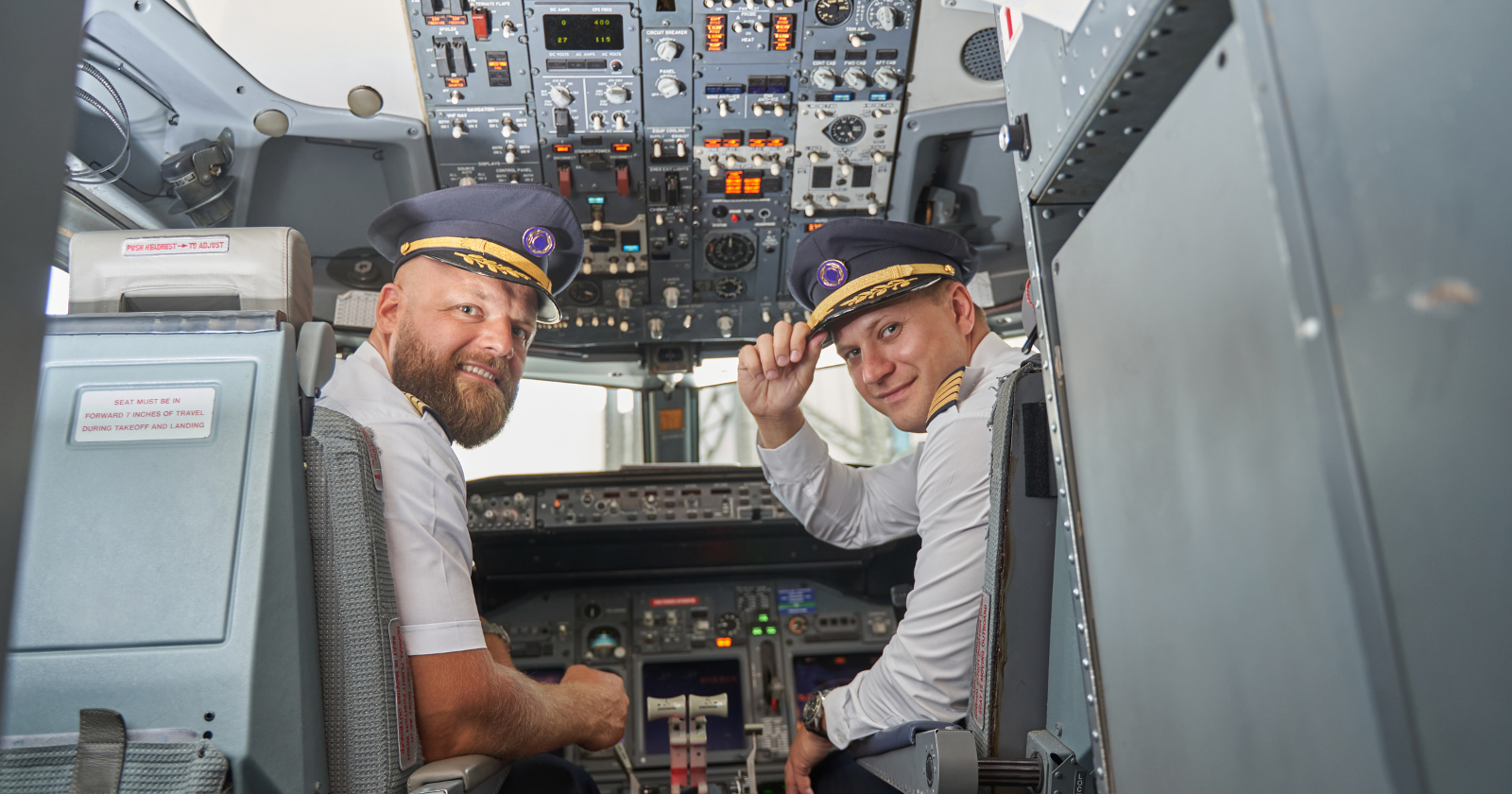
On January 25, 2024, a Batik Air Airbus A320 leveled off at 36,000 feet on a domestic route from Kendari to Jakarta, carrying 153 passengers and four flight attendants. For 28 minutes, air traffic controllers radioed the cockpit and got no answer. Indonesia’s National Transportation Safety Committee later confirmed why, in an investigation reported by CBS News: the 28-year-old co-pilot had fallen asleep, and the 32-year-old captain, waking to find the aircraft off its assigned track, had been asleep too. Both pilots were suspended while investigators worked out what happened. What investigators found next is the part that gets left out of most retellings.
What the investigation actually found
Neither pilot had skipped a legally required rest period. The captain had logged 35 hours off before the flight; the co-pilot had logged 53.
By the rulebook, both men were rested. What the rulebook could not measure was what actually happened during those hours off. The co-pilot told investigators he had become a father to twin infants a month earlier and had moved house two days before the flight, and that he had woken repeatedly through the night to help care for the newborns.
Fifty-three hours off duty is not the same thing as fifty-three hours of usable sleep, and nothing in the paperwork that cleared him to fly distinguished between the two.
Why “well rested” is a paperwork category, not a biological one
Flight-duty regulations, in Indonesia, the US, and almost everywhere else, are built around counting hours: hours on duty, hours off duty, hours since the last rest period. That structure exists because hours are countable and auditable in a way that sleep is not.
A 2003 study by Hans Van Dongen and colleagues, published in the journal Sleep, found something specifically relevant here: people whose sleep was chronically restricted for two weeks showed steadily worsening reaction time and attention, while their own subjective ratings of how sleepy they felt largely plateaued after the first few days.
The people in the study stopped noticing how impaired they were becoming, even as the impairment kept getting worse. A duty-time log can confirm someone had the opportunity to rest. It cannot confirm they used it, and neither, reliably, can the person who was supposed to be resting.
What the fatigue models were actually built to predict
The tools regulators lean on to fill that gap are biomathematical fatigue models, and the Fatigue Risk Management Systems built around them are now standard at major carriers as an alternative to flat duty-hour caps. These models were developed and validated mostly against conventional flight patterns, the kind of scheduling that existed when the underlying research was done.
Ultra-long-range flights, the nonstop routes of 16 hours or more that have become common only in the last two decades, weren’t the case the models were built to handle first. A 2024 study in Frontiers in Environmental Health, led by researcher T. Leigh Signal, tracked pilots flying a 16-to-17-hour Auckland-to-Chicago route and found their in-flight sleep averaged only 3.3 to 3.8 hours despite scheduled rest breaks, and that pilots did not adjust their circadian rhythm to local time the way the models assumed they would. The paper is direct about the implication: the biomathematical tools used to plan these routes may be validated for the flying that came before them, not for the flying that increasingly defines long-haul aviation now.

Two different problems wearing the same disguise
The Batik Air flight was not an ultra-long-haul route. It was a domestic hop of a few hours. That distinction matters, because it shows the same underlying failure appearing in two unrelated places rather than one. On a short domestic flight, the gap is between legally logged rest and actual sleep obtained, invisible to any duty-time count. On an 18-hour transpacific flight, the gap is between what a validated fatigue model predicts a well-rested circadian system will do and what pilots’ bodies actually do when the schedule outruns two decades of established research. Both gaps produce the same outcome: a pilot who is, by every number the system tracks, fit to fly, and isn’t.
What this looks like for anyone whose output depends on self-reported rest
Writers and other people who set their own hours run a version of the same experiment, usually with no investigator ever checking the results. Someone who logged eight hours in bed after a late deadline has the same blind spot the Batik Air co-pilot had: time spent unconscious doesn’t reliably track time spent recovering, and the Van Dongen research suggests people are poor judges of that gap in themselves. That substitution — assuming sleep obtained equals function restored — is what let a legally rested co-pilot fall asleep at 36,000 feet.
This doesn’t make duty-time rules worthless, and neither Batik Air pilot broke a single regulation. It makes a narrower point: a system built to count hours will keep clearing people as rested right up until the moment the thing it can’t count, actual recovered sleep, runs out from under them.
Fixing that means measuring something harder to measure than a clock, which is exactly why, two decades into ultra-long-range flying and after one domestic incident that made international news for reasons that had nothing to do with route length, the tools for doing it are still catching up.