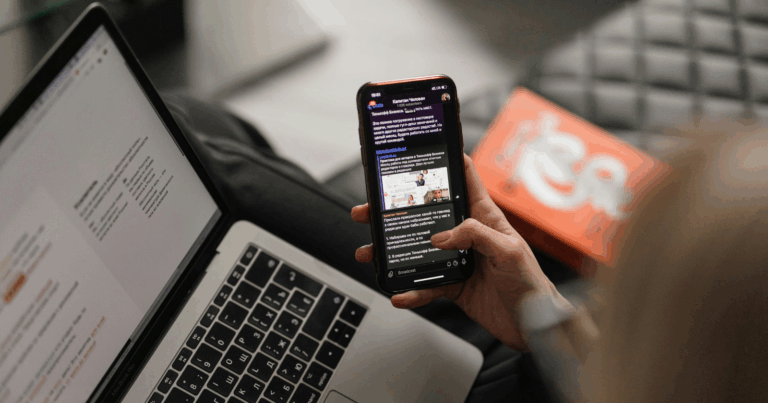


Same table if it’s free, same order, same fifteen minutes of settling in before the laptop actually opens. The chair faces the same direction. The noise level is close enough to what it was yesterday that it barely registers. Nothing about the scene looks deliberate from the outside. It looks like someone who just likes coffee shops, or someone who can’t work at home, or someone with a mildly rigid personality.
Ask the person doing it why they keep coming back to the same spot and the answer is often something closer to a shrug than an explanation. It’s just where the work happens. But underneath the shrug, a fair amount of quiet cognitive labor is getting done before a single sentence gets written, and most of it has less to do with the coffee than with what a familiar room is doing to the brain that walks into it.
It’s worth taking that shrug seriously, because dismissing the routine as a quirk skips over what seems to actually be going on. A fixed location isn’t a superstition standing in for discipline. It looks more like a set of small, mostly invisible jobs the room is doing on the writer’s behalf, before the first sentence gets typed. Four of those jobs hold up well enough to spell out on their own.
1. It uses up fewer small decisions before the real one
Every choice made before the actual work starts, where to sit, what to order, whether to put in headphones, whether this table or that one, draws on the same limited pool of mental effort the writing itself is about to need. A routine spot collapses most of those choices into a default. The order is already decided. The seat is already decided, or close enough. What’s left is the one decision that actually matters, which is whether to start.
The Decision Lab, a research group that translates behavioral science for a general audience, puts the underlying pattern plainly: “Decision fatigue describes how the quality of our decision-making declines as we make additional choices, as our cognitive abilities get worn out.” A fixed location doesn’t eliminate decisions. It just moves a batch of small, low-stakes ones out of the day entirely, so there are fewer of them left to wear a person down before the harder one shows up.
2. The room itself becomes part of how the brain finds its footing
Memory researchers have spent decades documenting something called context-dependent memory: the finding that recall tends to be stronger when a person is in roughly the same physical environment where the memory was originally formed. Michael Seddon, writing in the TEAN Journal in 2019, defines it this way: “Context-dependent memory describes the phenomenon in which recall is stronger when a subject is present in the same environment in which the original memory was formed.”
Seddon’s own study looked at exam recall in classrooms rather than creative work in coffee shops, and the effect he measured was specific to that setting, so it would be overreaching to claim the same table produces the same boost for an essay draft. But the mechanism it points to is a reasonable explanation for something a lot of regulars report anyway: the room doesn’t just hold the laptop. After enough repetition, it starts to function as a cue that this is the place where focus happens, in the same rough way a familiar classroom cues an exam-taker’s recall.
3. It supplies company without asking anything of the person receiving it
A coffee shop is neither home, where the to-do list lives, nor a workplace, where other people expect something back. The sociologist Ray Oldenburg spent his career studying spaces that sit outside both categories, ones people return to voluntarily because they’re easy to be in rather than because anyone requires it. He called them third places, and defined the term as “a generic designation for a great variety of public places that host the regular, voluntary, informal, and happily anticipated gatherings of individuals beyond the realms of home and work.”
A writer parked in the corner with headphones on isn’t really participating in that gathering, but they’re borrowing its terms. Other people are near enough to keep the space from feeling isolated, and far enough that nobody is owed a conversation. That’s a strange, useful middle setting for work that requires concentration but not solitude, and it’s part of why a busy room can feel more workable than an empty one.

4. It gives the work a clear place to start and a clear place to stop
Most writing sessions don’t have a natural edge. The draft doesn’t announce when it’s done for the day, and the desk at home doesn’t stop being the desk once the laptop closes. A location tied specifically to writing solves that by accident. Walking in functions as a start; walking out, closing the laptop, settling the bill, functions as a stop. The two acts don’t require willpower so much as they require moving through a doorway.
That boundary matters more than it sounds like it should. Work that has no clear ending tends to bleed into everything around it, staying half-open in the back of the mind long after the laptop is shut. A location that’s only ever used for one purpose doesn’t carry that residue home. Leaving the room is, in a small and literal way, how the work gets left behind too.
Compare that to writing at a kitchen table, where the same surface also holds mail, dishes, and whatever else the day drops on it. The work never gets a clean edge, because the space it happens in is never used for just one thing. A coffee shop supplies that edge automatically, simply because nothing else happens there. The routine isn’t decorative. It’s doing a real job that an undedicated space has no way to do.
Believing any of this requires no faith in the coffee shop being magic, and no particular brand of coffee or specific chair. What these four reasons add up to is closer to this: a fixed location quietly does a few jobs that would otherwise fall to willpower alone, cutting decisions, cueing focus, offering company without demands, and marking where the work begins and ends. For a lot of people, that’s not a quirk worth outgrowing. It’s a fairly efficient way to make a blank page a little less blank before they’ve written a word.