
We’ve been here before.
Not here as in “watching a newsletter platform grow fast.” Here as in watching the entire blogging world reorganise itself around a new thing that promises to fix everything the last thing broke. It happened with Facebook Pages — extraordinary reach, until the algorithm changed and organic visibility collapsed. With Medium — clean reading experience and built-in discovery, until the monetisation model shifted and writer payouts became unpredictable. With Clubhouse — a genuine new format, until it wasn’t. The pattern is not that these platforms were bad. It’s that the promise and the eventual reality diverged, usually once investor timelines became more pressing than creator economics.
Blog Herald was founded in March 2003, the same year WordPress launched — which makes it one of the longest-running publications dedicated to the blogging industry anywhere on the web. That archive spans Technorati rankings and Movable Type migrations, AdSense changing everything and Google’s algorithm changes taking some of it back, the pivot to social, the pivot to video, the pivot to podcasts, the pivot back to text. Digg collapsing. Google+ getting shut down. Medium shifting its model repeatedly. Every wave of “this is what blogging is now.”
We took ownership of that legacy in 2024. What it gives us is not twenty years of our own coverage — it’s twenty years of industry history that we think is genuinely instructive for what’s happening right now with Substack.
So when every creator newsletter, every YouTube productivity channel, and every LinkedIn thought leader tells you that Substack is the move for independent publishers right now, we want to offer something more useful than hype in either direction. Not “Substack is great, here’s how to grow.” Not “Substack is a trap, here’s why.” Just what we actually think, based on what that history suggests.
What Substack has genuinely gotten right
Let’s start with what’s true and good, because there’s real substance here.
Substack solved a problem that bloggers have struggled with for years: the conversion from reader to paying subscriber. The platform makes it frictionless. A reader likes your work, clicks one button, enters payment details, and becomes a paying subscriber. No separate payment processor to set up. No membership plugin to configure and maintain. No separate email platform to sync with. The entire pipeline — from free reader to paid subscriber — is built in and works.
That matters. For independent bloggers who want to earn directly from their audience without becoming a full-stack technical operator, Substack removed a genuine barrier. It’s why serious journalists like Matt Taibbi, Bari Weiss, and Glenn Greenwald left legacy institutions to build direct reader relationships on the platform. Not because Substack is perfect, but because it made the economics of independent publishing more accessible than they’d ever been.
The subscriber portability is also real and worth acknowledging. You can export your email list at any time. That’s not a given across platforms — it’s a deliberate choice Substack made, and it matters for anyone thinking carefully about platform risk.
And the recent growth numbers are genuinely significant. At a creator event in October 2025, Substack reported that the platform added 32 million new free subscriptions and nearly 500,000 new paid subscriptions in just three months — the majority driven by Notes and the app itself, not external traffic. These are company-reported figures from a promotional event and have not been independently verified, but even with that caveat, they describe a platform with real momentum, not one struggling to find its audience.
What the advice ecosystem isn’t telling you
Here’s where we’ll be direct, because the “start a Substack” advice flooding the internet right now is often incomplete in ways that matter.
The first thing most advice glosses over is that Substack’s economics only work if you can convert readers to paid subscribers — and that conversion is harder than the platform’s success stories suggest. Substack takes 10% of subscription revenue plus Stripe’s payment processing fees. If you’re earning $500 a month in subscriptions, you’re keeping roughly $435. If you’re earning $5,000, you’re keeping roughly $4,350. At scale, that cut is meaningful. And getting to scale requires convincing people to pay you monthly for your writing, which is a fundamentally different challenge from getting people to read you for free.
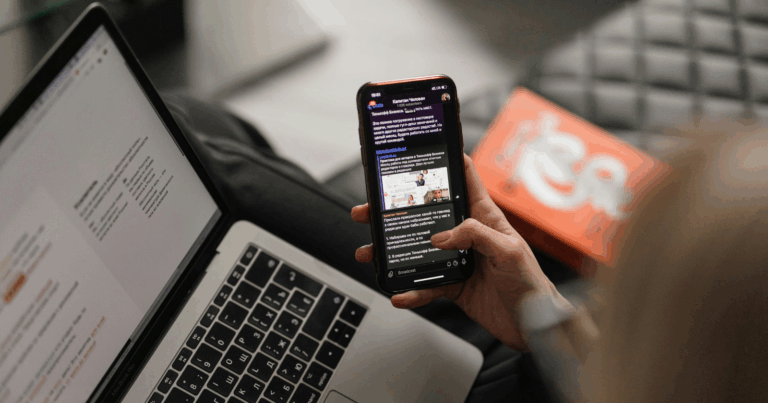
The second thing: Substack is no longer the quiet text-first platform it was in 2020. We covered this in detail recently — the platform added Notes (a short-form social feed), native video, live streaming, and a mobile app with its own algorithmic feed. The profile UI now shows a writer’s Notes activity before their archive of essays. Discovery increasingly happens inside the app, not through external traffic. This means that growing on Substack now requires showing up in a social media sense — daily or near-daily Notes, engagement with other writers’ content, consistent visibility in a feed. That is genuinely valuable if that’s what you want to build. It is a meaningful commitment if you came to independent publishing specifically to escape that kind of presence requirement.
The third thing, and the one we feel most strongly about: Substack is a platform, not a foundation. The ability to export your subscriber list is a safeguard, not a substitute for owning your audience. A Substack publication lives on Substack’s infrastructure, subject to Substack’s terms, shaped by Substack’s algorithm. The company’s $1.1 billion valuation and $100 million Series C are investor bets on future returns — and investor-backed platforms, at some point, need to generate those returns. What that looks like for creators five years from now is genuinely unknown.
We’ve watched this movie before. We watched it when bloggers moved their audiences to Facebook Pages because the reach was extraordinary and the tools were better than managing your own site. We know how that ended. We’re not saying Substack will follow the same path. We’re saying that the structural incentives that tend to produce that path are present here too, and anyone building a publishing business should account for that honestly.
Who should actually start a Substack
With all of that said — and we mean it genuinely, not as throat-clearing before we dismiss the platform — here is our actual view on who should be on Substack right now.
If you have an existing audience somewhere else and want a better direct monetisation tool than what your current setup offers, Substack is worth serious consideration. The conversion pipeline is excellent. The reader experience is clean. The subscriber portability means you’re not locked in. For established bloggers looking to add a paid tier without building a full membership infrastructure from scratch, it’s a legitimate option.
If you’re a writer — not a blogger in the SEO-and-traffic sense, but a writer who has things to say and wants to say them to people who care — Substack’s current growth moment is real. The platform’s internal discovery is working. The Notes feed is surfacing new writers to relevant readers. The growth numbers from late 2025 aren’t fabricated. If you’re willing to engage with the platform’s social layer, the opportunity to build a new audience from scratch is more viable on Substack right now than it has been in years.

If you cover a specific niche with genuine depth and have something to say that isn’t available anywhere else — a healthcare policy writer with fifteen years of regulatory experience, a materials scientist explaining what’s actually happening in battery technology, a local investigative journalist covering a beat no one else is funding — Substack’s subscriber model rewards exactly that. The platform’s algorithm optimises for subscriptions rather than ad impressions, which means it’s structurally incentivised to surface writers whose work people find valuable enough to pay for, not just scroll past.
Who should think twice
If your primary goal is SEO-driven traffic and ad revenue, Substack is the wrong tool. It does not help you rank in Google. It does not integrate with display ad networks. The content lives on Substack’s domain, not yours. If organic search is your main distribution channel, a self-hosted WordPress site remains the correct infrastructure.
If you’re hoping Substack will solve a problem that’s actually about content quality or audience fit, it won’t. The platform’s growth mechanics are better than they’ve ever been, but they don’t convert mediocre writing into paying subscribers. The writers earning serious money on Substack — the ones in the six-figure tier — tend to be producing work that people find genuinely difficult to get anywhere else. That’s not a platform problem to solve. It’s a writing problem.
And if you’re considering Substack as your only infrastructure — no self-hosted site, no independent email list, nothing outside the platform — we’d encourage you to think carefully about that. Export your subscriber list regularly. Maintain a presence on a domain you own. Treat Substack as a distribution channel and monetisation layer, not as the entire edifice of your publishing operation. The history of this industry suggests that’s the posture that survives platform changes intact.
What we’d actually tell a blogger today
We don’t think you need to start a Substack. We also don’t think you need to avoid it. We think you need to understand what it is — a social platform with better creator economics than most, a growing internal discovery engine, and a ten percent cut of everything you earn — and make a clear-eyed decision about whether that fits the kind of publishing operation you’re trying to build.
The blogging industry has been declared dead and reborn so many times that the declarations have become background noise. RSS was going to kill blogging. Social media was going to kill blogging. Video was going to kill blogging. AI overviews are going to kill blogging. None of it has killed blogging, because the underlying thing — a person with something to say, building an audience around that, earning a living from the relationship — is not a format. It’s a practice. Practices don’t get killed by platforms. They adapt to them, selectively, with judgment.
If Substack fits your strategy, build on it thoughtfully. If it doesn’t, don’t let the noise convince you it should. Either way — own your list, own your domain, and build something that doesn’t depend on any single platform staying generous indefinitely.
We’ve seen what happens when they don’t.