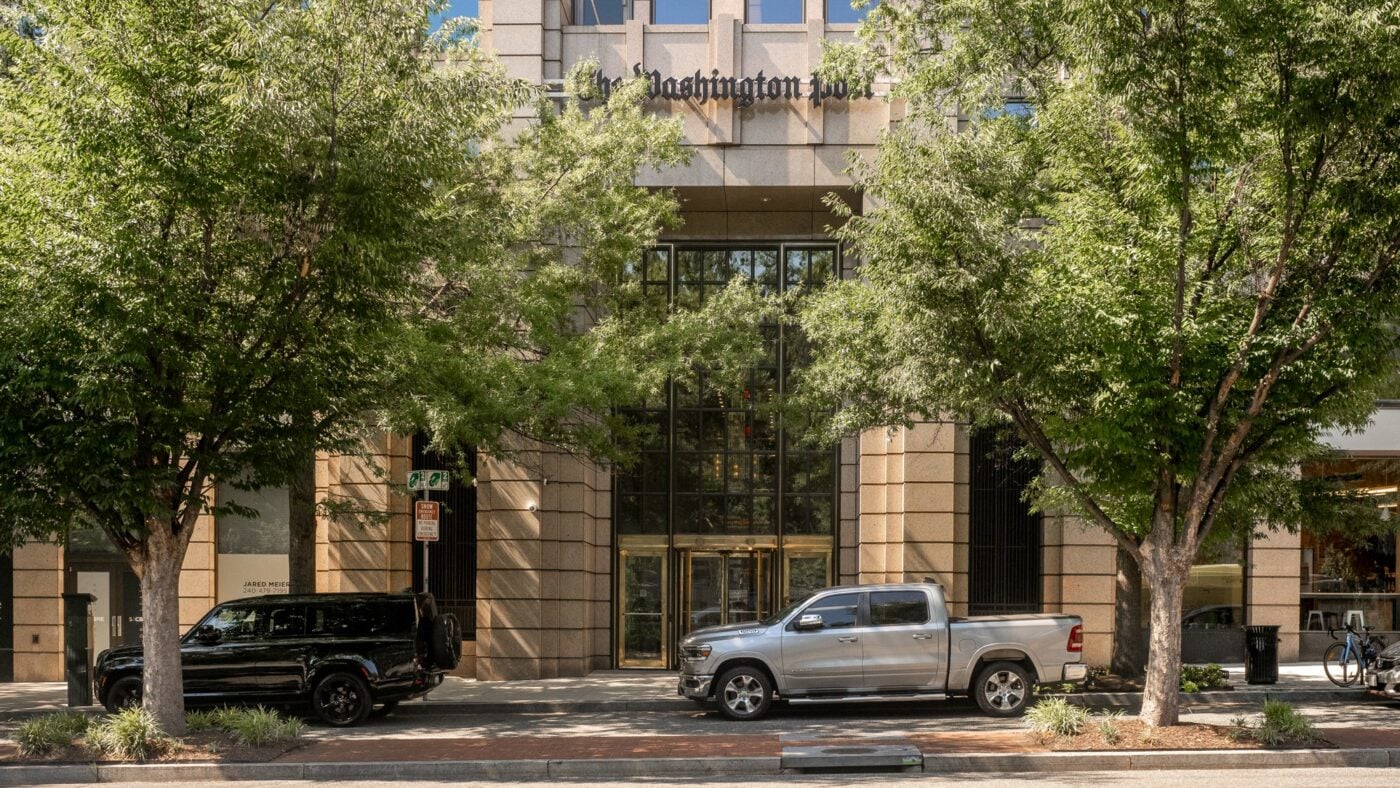
The Washington Post announced on 25 October 2024 that it would stop endorsing candidates for president. In the 11 days from then to Election Day, more than 300,000 subscribers cancelled, NPR reported. That was more than 12 per cent of the paper’s digital subscribers.
Those readers had paid for a paper that told them, in its own slogan, that “Democracy Dies in Darkness”. Many of them treated the decision to sit out the presidential race as a betrayal of what they had bought, judging by the cancellations that followed.
The open question is what they were rejecting: neutrality itself, or an owner they saw as bending toward Donald Trump.
The Los Angeles Times offers one comparison. Its owner, Patrick Soon-Shiong, also blocked a planned endorsement of Kamala Harris that month. The Times reported that an estimated 20,000 subscribers dropped the paper afterwards. Nieman Lab put its paid base at about 650,000. The gap between the two papers is wide, but the numbers alone do not explain it.
“It’s not often that a publication loses subscribers on this scale,” Damian Radcliffe, Carolyn S. Chambers Professor in Journalism and Professor of Practice at the University of Oregon’s School of Journalism and Communication, said in an email. “For any publication, this would represent a huge hit, especially at a time when media companies are leaning more into generating income directly from their audiences, as they reduce their dependency on (declining) advertising revenues.”
“What’s notable here is that these cancellations were driven by editorial decisions rather than price or product changes,” he said.
A newspaper endorsement is a recommendation of a candidate written by the editorial board, the opinion side of the paper. It is separate from the newsroom, which reports the news and does not take a side.
The Post’s board had drafted an endorsement of Harris. On 25 October 2024, publisher Will Lewis said the paper would not endorse in that year’s presidential race or in future ones. It was the first time in 36 years the paper had stayed out of a presidential race. The owner, Jeff Bezos, made the decision.
The decision covered the presidency only. The Post said it would keep endorsing in other races, including local contests, and its board had already backed candidates for the Senate and House in 2024.
Bezos, the founder of Amazon, has owned the Post since 2013. Amazon and his space company, Blue Origin, hold federal contracts worth billions of dollars a year. In February 2017, during Trump’s first term, the paper adopted “Democracy Dies in Darkness” as its first official motto. Semafor reported in February 2026 that new marketing campaigns were not meant to replace it.
Within three days of the announcement, more than 200,000 readers had cancelled, about 8 per cent of roughly 2.5 million paid subscribers. Two columnists resigned. Editorial page editor David Shipley told staff he had tried to talk Bezos out of it, NPR reported. “I failed,” he said.
Robert Kagan, an editor at large who quit that Friday, said on CNN: “We are in fact bending the knee to Donald Trump because we’re afraid of what he will do.” Officials from Blue Origin had met Trump a few hours after the decision became public.
Bezos said he had not known about that meeting. In an opinion piece in the Post, he said ending presidential endorsements would help counter a “perception of bias”. “No quid pro quo of any kind is at work here,” he wrote. He added: “When it comes to the appearance of conflict, I am not an ideal owner of The Post.”
The cancellation figures do not come from the Post. The company does not publish circulation numbers and declined to comment on NPR’s reporting. The totals come from people inside the paper who spoke on condition of anonymity.
By January 2025, NPR put the total at more than 300,000. A Post spokesperson said the paper had persuaded about 20 per cent of those cancelling over the endorsement to stay. The paper had been on track to cut its annual loss to about $50 million. NPR reported that figure went back up to about $100 million.
Matthew Pressman, associate professor in the College of Communication, Media and the Arts at Seton Hall University, said in an email that he knew of no newspaper that had lost so many subscribers over a change in its opinion pages.
“I think the Washington Post set the record with Bezos’s moves in 2024,” he said. “Other newspapers have had radical shifts in opinion-page ideology. For example, the New York Daily News, which I just published a book about, transformed almost overnight from strongly pro-FDR to fiercely anti-FDR at the end of 1940. But in that case they didn’t see any major drop in circulation.” FDR is Franklin D. Roosevelt, president from 1933 to 1945.
Pressman said the episode showed that many people pick which outlets to follow, and in particular which to pay for, according to whether those outlets match their politics. “This should be sort of obvious, and it isn’t a new development. It’s especially true for a general-interest, national publication like the Post.”
The owner’s conduct after the election gave critics more to point to. Amazon gave $1 million toward Trump’s inauguration fund, NPR reported, and Bezos sat on the platform at the swearing-in in January 2025.
The following month, Bezos told staff the opinion section would now argue for “personal liberties and free markets”. He wrote that “viewpoints opposing those pillars will be left to be published by others”. Shipley, the opinions editor, resigned immediately. Former executive editor Marty Baron called the move “craven”. More than 75,000 digital subscribers cancelled in the days after the memo, according to NPR.
The Post worked to replace the lost readers. A Post executive told NPR the paper had added about 400,000 subscribers, many at heavy discounts. NPR’s figures pointed to a net loss of “a couple hundred thousand”.
Radcliffe said discounts do not necessarily close that gap. “It’s important to get customers in through the front door, and discounts are a great way to do that. The challenge is to then keep these subscribers when that discount period ends.”
“Replacing loyal, full-price, customers with heavily discounted subscribers may boost the headline numbers, but it doesn’t necessarily restore lost revenue or long-term subscription numbers,” he said.
In February 2026 the Post cut about a third of its workforce. It scrapped the sports desk, closed its book section and cut the local news staff from more than 40 to about a dozen. Much of the foreign staff was laid off, including the entire Middle East desk. Lewis left, and chief financial officer Jeff D’Onofrio became interim chief executive. The paper’s losses had reached $100 million a year at their peak, NPR reported. NPR has reported the losses but has not tied the layoffs to the cancellations.
TheWrap, citing the New York Times, said more than 60,000 more subscribers left after the layoffs. A Post spokesperson disputed that number without giving another.
Radcliffe said the real test for the discounted subscribers comes when their introductory price ends. “How long do they stay? Do they leave when the price increases, or a few months later? Do they renew at full price, or another heavily discounted subscription?”
He said the larger question was whether the Post could do anything to win back the readers who left, or whether they, along with their trust in the paper, were gone for good.
Sources:
- Over 200,000 subscribers flee ‘Washington Post’ after Bezos blocks Harris endorsement, NPR, 28 Oct 2024
- Will Lewis’ first year at ‘Washington Post’: Cancellations, red ink and an exodus, NPR, 15 Jan 2025
- Bezos’ changes at Washington Post lead to mass subscription cancellations again, NPR via WVIK, 28 Feb 2025
- ‘The Washington Post’ cuts a third of its staff, NPR, 4 Feb 2026
- The Washington Post Lost Over 60,000 Subscribers Following Winter Layoffs, TheWrap, 14 Mar 2026
- The Washington Post says it will not endorse a candidate for president, The Washington Post, 25 Oct 2024
- Washington Post plans to endorse in local races, Montgomery Perspective, 26 Nov 2024
- Patrick Soon-Shiong’s controversial shakeup at the L.A. Times, Los Angeles Times, 15 Dec 2024
- The L.A. Times sees subscriber bump during wildfire coverage despite removing paywall, Nieman Lab, 13 Jan 2025
- Democracy Dies in Darkness, Wikipedia, accessed Oct 2026
- Washington Post suffers marketing mishap with new slogan, Semafor, 8 Feb 2026