
Calculating Your Worth as a Blogger

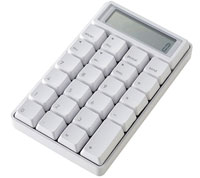 There is no magic calculator that will tell you how much your blogging services are worth. We each have an interdependent relationship with money that is uniquely our own. The $7.50 you just earned for that 500-word blog post might be worth your time. Or not.
During discussions with bloggers, I have found that the average blogger (not a superstar, but not a slouch) earns around $10 per 250-word post. Of course, most people exceed the word count to please their employer. (Heck, this post is contracted for 250 words and it’s closer to 500!).
So we’re looking at $.04 cents a word. But there are other factors that bring down that fee considerably. Here are a few things to consider when trying to determine if a blogging job is worth taking/keeping.
– Do they supply topics?
When I speak with fellow bloggers, I often find that they share a consistant thought: finding topics to blog about is the most time consuming part of the process. If your blog employer expects you to come up with your own topics, keep a watchful eye on the amount of time it takes you to determine what to write about. Also, if you need to get topics approved before writing them, factor in the time you spend going back and forth with an editor.
– Do they want you to supply images?
Another silent time-eater is searching for royalty-free images that have a public-use license. After you find a photo that matches your topic, it is often necessary to crop, correct, or create a new image.
– What blog platform are they using?
News flash: not everyone is using WordPress! Your blog employer might be using a different platform, and that means you’ll have to spend some time learning how to post. I understand that most systems have a quick learning curve, but as soon as you are asked to login to a system – any system – you are using up your time.
– Assigning categories, tags and SEO.
It takes mere seconds per posts, but if you are writing a lot, that time can quickly add up. A strong blogger will devote time to these areas, and therefore should build it into their required compensation.
Each of the aforementioned tasks will take different people different amounts of time to accomplish. In the case of THIS blog post, here’s my time breakdown.
TOPIC: 10 minutes
IMAGE: 5 minutes
WORDPRESS LOGIN: 1 minute
TAGS, etc.: 1 minute
WRITING/EDITING: 20 minutes
PROOFING: 8 minutes

That’s a total of 45 minutes. Now if I was making the average $10 per 250-word post, I’d be at around $7.50 an hour. Is that worth my time? Only I can answer that question.
There’s an abundance of writers waiting in line to take your blogging gig. And the fact that they’ll take half the money you earn and write twice as well, doesn’t help. Before you go demanding more money, be sure to approach cautiously and be ready to back up your worth with real data (traffic increase, comment generation, industry standards, etc.).
Are there any methods you use to determine if freelance blogging is worth your time? Or are you simply happy to have the opportunity to make a few extra bucks doing something you love?
P.S. – I forgot that I’d also need to minus out the 4% that Paypal keeps! So in total, if we pretend I’m earning the ‘going’ rate, I’ve earned $7.20 for around 45 minutes of my time writing a 500-word blog post.

There are plenty of clients who want even more work for that $10 per post — like promoting the posts you write on social networking sites.
It’s so crucial to look at you’re really getting paid to do, to determine whether you’re getting a fair rate for your work. There are lots of blogging jobs where it’s actually more lucrative to set up your own blog and install AdSense rather than writing for a particular client!
Great addition, Thursday. Many blog employers assume that promoting your posts comes with the turf, and that in itself, is a time-consuming proposition. I do that with most of my posts, and should have factored in a few more minutes. (Along with replying to comments!) I’m definitely at the one-hour mark for this post…
You’re right, spend a lot of time writing to a post. I need at least 3 hours for one title alone. And what about other activities? If the writers have a steady job, 3 hours for them is the time to make money and greater than their blogs income. Something like that’s my guess, so if you do not have the readers “It will be in vain write a blog?”
http://tokyozion.com/board/685? 2?? ???? MBC? ??? PD??? ?? ???? ??? ??? ?? [??? ??? ??????(???)]? ?? ,???????, ??? ??? ????, ????,??,??? ???? ????, ??? ???? ?? ??? ??? ??? ???.
???? ???? ???? ???? ???? ??? ??? ???? ??? ?? ??? ???, ??? ??? ??? ???? ?? ???? ?? ??.
??? MBC? ???? ?? ?? ??? ??? ?? ???? ?? ?????? 2?? ??? ??? ??? ?? ????? ??? ????
??? ????? ??? ???? ??? ??? MBC? ??? ??? ?? ??? ??? ????. ???? ???? ????? ???? ???? ??? ?? PD??? ??? ??? ??? ???.
I’m so tired of hearing the hype about how much money there is to be made by blogging. But you did a great job of laying out the relevant facts without any hype. Thanks for telling it like it is.
I am just creating my first blog and plan on creating several more on related topics. The purpose of my blog is really to sell more of my own books, but in creating it I realize it is a much bigger endeavor and I do sincerely feel obligated to provide good valuable content.
I will need to hire someone to keep the content flowing. Is it safe to say that $20 an article is a fair price for a 500 word or less article? It seems inexpensive to me, but I guess you get what you pay for. Do you have any GOOD resources for freelance writers? I tried eLance it seems you never know what your going to get until you make the leap and them its sometimes too late.
I’m completely floored. I had no idea at all what the going rate for a blog post was (to be honest I was only marginally aware that people paid others to blog for them) but $10 for 250 words seems remarkably low.
It just goes to show it’s a buyer’s market I guess.
I didn’t know it was so low. I thought it was around $50.